
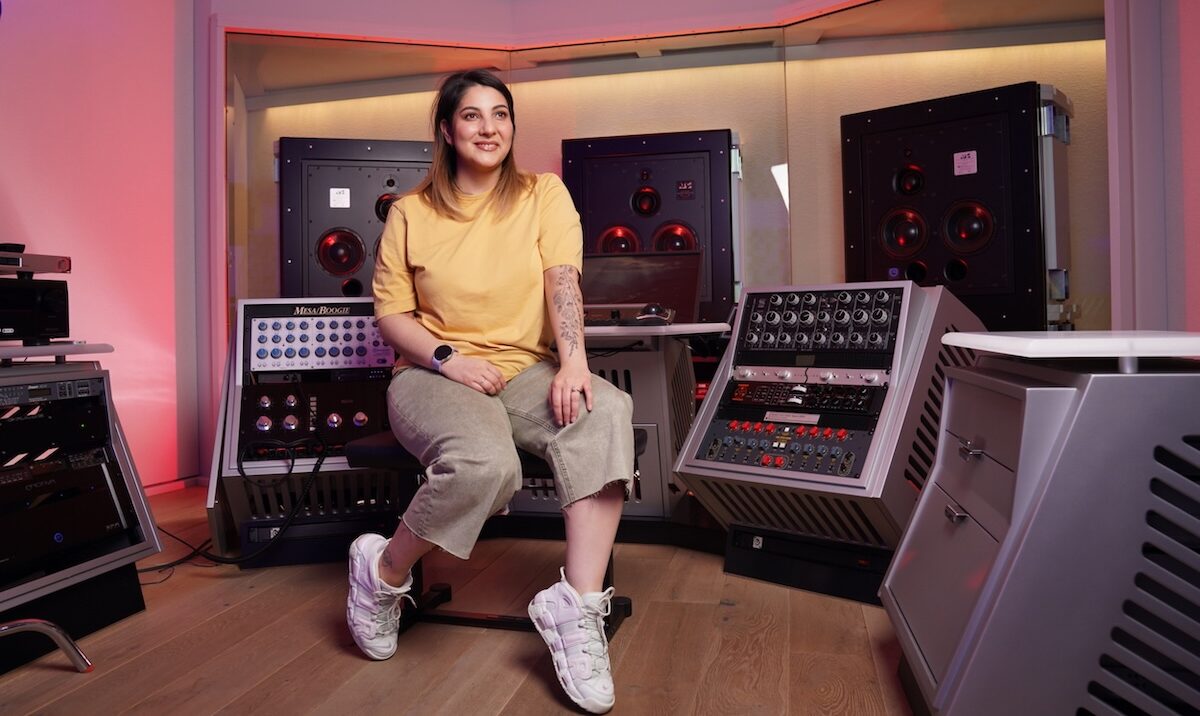
Idania Valencia had never been to the Grammys before. The Mexico City native was nominated twice for her mastering work on Charli XCX’s sixth studio album, 2024’s Brat. While she didn’t win, she describes attending the event as “surreal.”
“For us mastering engineers, it’s very hard to get nominated,” she says. “We can only get three categories—Album of the Year, Record of the Year, or Best Engineered Album. Even if you work on an album that gets nominated for anything else, we don’t get the nomination. So that’s why it was really surreal because you have to get one of the big ones to get the nomination.”
She also notes that while she’s not new to the industry—having been doing it for 10 years—she was surprised to have been nominated since more seasoned engineers are typically bestowed that honor. “It was very surprising and it was very exciting.”
Valencia’s passion for music began at 14 when she started playing the piano and writing songs, which inspired her to pursue degrees in both music composition and music production at Academia de Música Fermata. During her time there, she fell in love with the production and engineering aspects of music, eventually recognizing mastering as her true calling.
After earning a degree in music engineering in 2015, Valencia secured an internship at Sterling Sound in New York City, where she earned a position on Tom Coyne’s production team ( known for Kool & the Gang, Billy Ocean, and A Tribe Called Quest).
In 2017, Valencia mastered Tove Lo’s “Influence” Remix by TM88. Since then, she’s garnered mastering credits for a diverse range of artists, including Charli XCX, Ariana Grande, Benson Boone, Madison Beer, Coldplay, Pharrell Williams, Jimmy Fallon, Sam Smith, Shawn Mendes, and others.
Here, Valencia explains how she wields her magic and “on the engineering side of music here at the studio” being “the only woman engineer.”
What does a mastering engineer do? Walk me through that process.
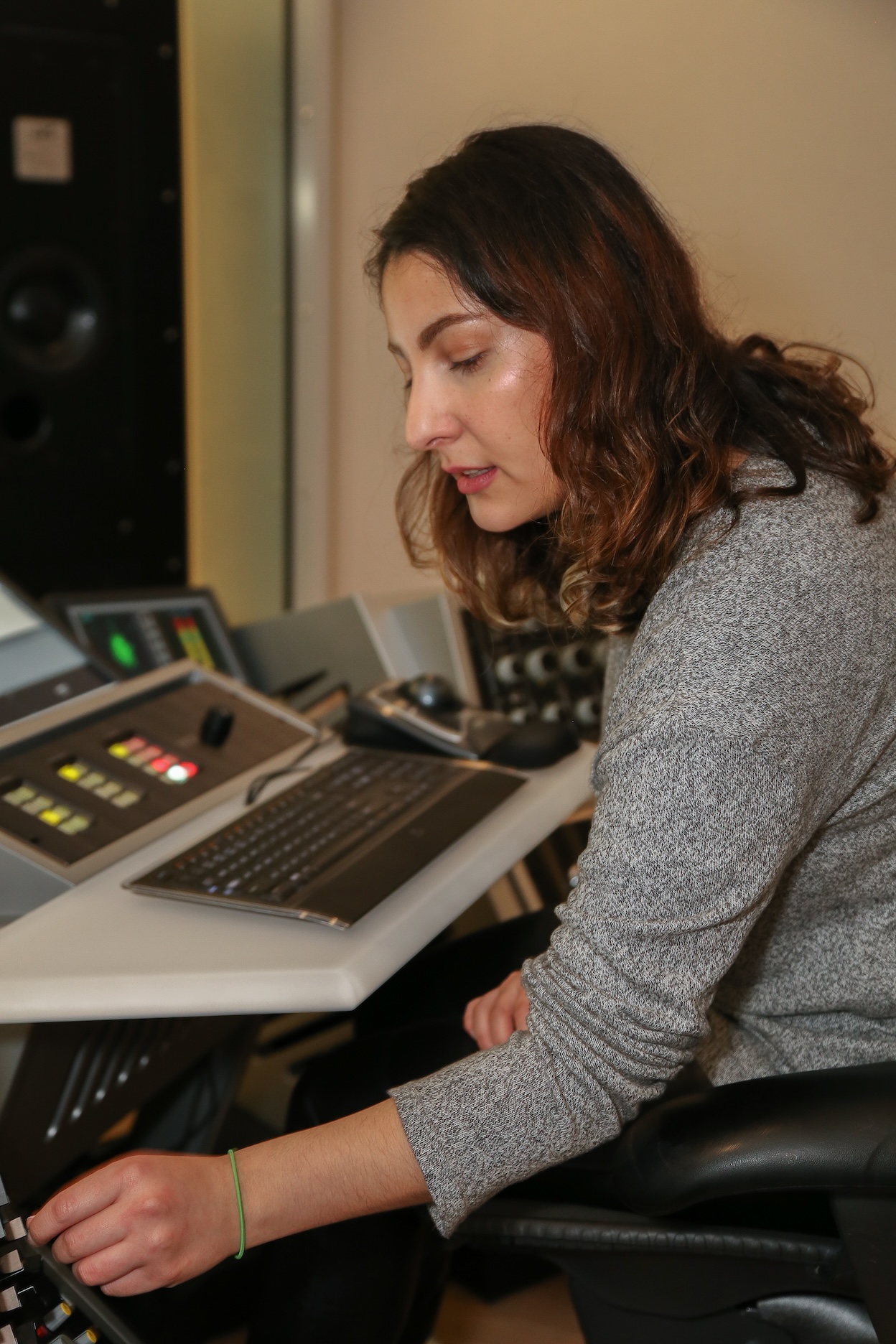
Mastering is the last step in post-production before a song comes out on the radio. So usually, someone writes a song, then the writer, the artist, the producer, they’ll work together on the song, and then the producer puts together the song and he’s like, ‘This is how I want it to sound,’ the instruments, the arrangements, all of that. Then the song goes to a mixing engineer who puts together all the parts and balances and basically puts together everything. And then the song sounds like a song, like a mixed song. And then it’s our job to make sure we get that song and that the song is radio-ready in the sense of level and EQ (a tool used to improve the tonal balance of a song), and also that it just sounds polished and professional.
But we also make sure that the volume and the level work for streaming, for CD, and for vinyl, so it can be produced through every medium and sound. When we get an album, we make sure it is cohesive, the album has the same balances, around the same EQ, same kind of sonic profile. But we also have to make sure that if you are listening to a playlist—like how people do a lot on Spotify now—that that song sounds on par with all the others.
When you’re a kid and you love music, you don’t say, ‘When I grow up, I want to be a mastering engineer.’ You usually say, ‘I want to be a musician.’ How did you get into this field? What drew you to it?
Well, it was exactly as you say. I feel like a lot of us people who are in the industry don’t really know that engineering exists until we start getting into music and see, wow, this is a huge world. There is so much you can do besides just being a musician.
What happened to me is that around age 14, I really got into playing the piano and writing songs and things like that. So when I went to university, I wanted to be a music composer. And my parents were like, ‘Okay, that’s all good, but we need you to have a backup plan because this is a very risky profession.’ And at the school I was going to in Mexico City, they also had audio engineering and music production as an option. I knew it wasn’t like other engineering careers, but my parents didn’t. So it sounded good enough to them. And I was like, okay, I’ll do this, and then I’ll get into my music music composition and stuff. But what happened was that as school went on, I started realizing that I really liked the engineering part of it because I’m a very technical person. It’s a different way of creating, just being behind the [sound]board. I just found it very interesting and I thought I was good at it. So that’s how I started getting into it. So by the time I finished that school, I moved here to the U.S. to a school called Full Sail University to specialize more in the whole engineering thing.
By then, I had already heard about this mysterious thing called mastering. And I was like, that sounds like something I want to pursue. And that’s what I did after college, which is interesting. I feel in my case, a lot of engineers and mixers get into mastering after they’ve done the whole thing, like after they’ve been into recording for years, or they have been mixing for years, and then afterward they pursue mastering. And in my case, I just went for it right away. I knew I wanted it since the beginning. I think that it has helped my career because since I was very young, I started specializing in it and just the way we hear things as mastering engineers.
Obviously, you have to have a natural listening ability. How do you hone that? How do you train your ears to know what to listen for?
Well, it takes a lot of experience, obviously. I mean, what it takes is just a lot of listening. I work at a studio called Sterling Sound, which is a really big studio, and it’s one of the most important mastering studios in the world. What that gave me is that I’ve had the ability to assist and work here and listen to so much music over the years because I had to do quality checks for everything that was going out. And so it was hours and hours of listening nonstop every day for years. And that just gives you a sense of how genres are supposed to sound, and also you hear how distortion sounds, how clicks and pops sound, how editing errors sound, things like that. You learn to differentiate things and also what you can fix and what you cannot fix, and also what you should not fix. Because sometimes vinyl clicks and things, they’re on purpose; they put them as an effect.
You’re a woman of color in an industry that’s usually dominated by men. What’s that experience been like for you?
On the engineering side of music here at the studio, I’m the only woman engineer. Before me, there was Aya Merrill. She was one of my mentors. She retired. So yes, it’s basically just me.
Do you see that changing?
I definitely see it changing. There are more and more women mastering engineers but there’s still not that many. And I feel like the more girls and younger women see women like me, they will be interested in getting into these types of professions. I do think that in the past it may have been like, no, women just don’t do that. But I think now it’s just a visibility thing where they just need to know all of the options that they have.
Let’s switch gears slightly. When you were mastering Charli XCX’s Brat album, did you know that it was going to be a hit?
I knew the music was incredible and really good, and I personally really liked it. But over the years working I’ve seen it go both ways where you work on an album and it’s incredible and you’re like, wow, this is going to blow up. And then nothing happens. And then you hear something that’s awesome but you don’t have an idea of how massive it’s going to become. I remember back when I was still doing the QCs and stuff, listening to the Julia Michaels song “Issues.” And that one, I remember knowing this song was going to be big. Also when I listened to “Drivers License,” for example. There are some songs where I’ve just had that feeling and it matched. So you never know. But I knew this album was different. I mean, I’m a fan. I’ve been a fan since before working on mastering this album. So I was just hoping people would really receive it the way they did.
What kind of equipment do you use when mastering? Is this all done digitally or is there an analog component?
There’s both. Mainly there’s a lot of digital mastering, but there are still analog studios here where I work because it’s a big studio. We still have the capacity to work with analog gear.
Can you talk about some of your day-to-day equipment?
Yes. I do personally work more digitally and one of the reasons is because, here, we are very kind of fast-paced, and that has really helped us accommodate a lot of projects coming in. So mastering the song will take me usually between 30 minutes and an hour for one song. So a manager will help me organize my day. And then from there, I prioritize what I want to do in the day. I might do some revisions. In every song, I will just open the song and listen to the song; a little overview. From there I start evaluating what I have to do, how much headroom the song has, how much level I have to put into it to get it to the final listening level. Also, what kind of EQ process it might need, if it needs something else. So I usually use a DAW [Digital Audio Workstation] called Sequoia, which is also a little bit different because most people in the industry work with Pro Tools. I input the song and I usually go through a level process, then an EQ, then limiting (to increase the volume level without distorting it) then probably more limiting. I try to do limiting in different steps because it just sounds more natural and it helps me with distortion. Also, I just like the sound profiles of different limiters and how they help the song. And then after that, I might again do a little bit more EQ. If there’s any compression needed in the song, I will put it before my limiting. Basically that’s it. Every song is different. I might also use parallel compression. But I would say my two main tools are limiters and EQ.
How is AI affecting your industry? Do you think it will?
It already plays some role. There are two sides to it. There are some websites now where you can literally just input your song and it gets mastered with AI. But also there are plugins that are coming in with AI assistance. So basically they profile a song and the sounds and the queue, and they help you with suggestions on what processing you can do. I think that’s helpful too. I mean, you obviously have your instincts as an engineer and already know what to do with a lot of things, but still, sometimes there might be songs where you’re like, this is very different and I have no clue. So in those instances, I think it might be helpful.
On the AI mastering websites, I think it’s a service that does a decent job if you really need a master in a pinch, but I don’t think it can take our jobs yet. There’s an artistry part to it. Even though it’s a very technical thing, there’s always these kinds of sounds that you put into things when you work on them. The way you hear things is different. So I do think very professional mastering still cannot be replaced. I don’t know about the future. There are many things I do in a song that I don’t think can be replicated. Like, just reading each section of the song differently because you have to chop the song and treat it as different things. And AI takes the whole thing and adds one treatment.
Like a blanket, right? It’s not the same thing because there’s no personal stamp or subtlety on it.
Exactly. And I feel that’s also the reason why people choose different mastering engineers. Over the years you start to develop your own sound, your own kind of characteristics. That’s why some people choose one engineer over the other, or one creative over the other because they just kind of vibe with you. There’s that personality thing that just cannot be replicated yet.
What advice do you have for anyone interested in becoming a mastering engineer?
I would tell them to try a little bit of everything because it’s a really big industry, and when you are young, you only think you can be an artist or a music writer, and that’s it. So investigate a little bit more about what’s behind an album and who are all the people involved in making all of these things, because you might be surprised about the things that we do, and you might like them. And also just believe in yourself. Because I know I’m lucky. My family and my peers here at Sterling always support me. But I do think there might still be some women who might get some pushback from their parents or things like that. Just don’t listen to them. You can do whatever you want in any career. We are here and you are welcome.