
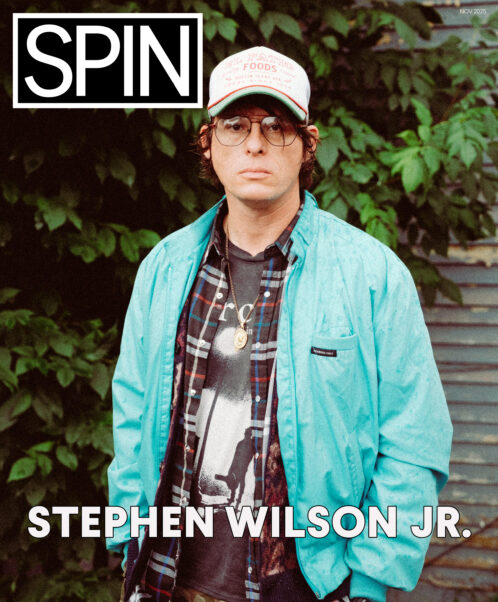
He pauses the memory to order a late breakfast—two over-easy eggs, a bowl of grits, an Americano—then resumes explaining how boxing prepared him for larger and larger stages as one of the biggest breakout stars in Nashville. “I was a super shy kid. Still am in a lot of ways. The ring is where I learned how to be in front of people and enjoy the roar of the crowd.”
Sporting a heavy red flannel shirt and camo cargo pants, with strands of hair sticking out from under his trucker hat, Wilson looks much younger than his 46 years, which he admits is ancient for someone just nominated for CMA New Artist of the Year. (Shaboozey, the next oldest among the nominees, is 16 years younger than Wilson.)
“The 25-year-old version of me was a different human being altogether,” he says, laughing, to let you know it’s an understatement. “I can’t imagine that kid trying to make a record. But I try not to get fixated on how many times the Earth has gone around the sun since I was conceived. That seems like a pretty arbitrary metric to evaluate someone’s relevance, especially in art. If anything, it’s given me the experience necessary to make hard decisions and appreciate the wins.”
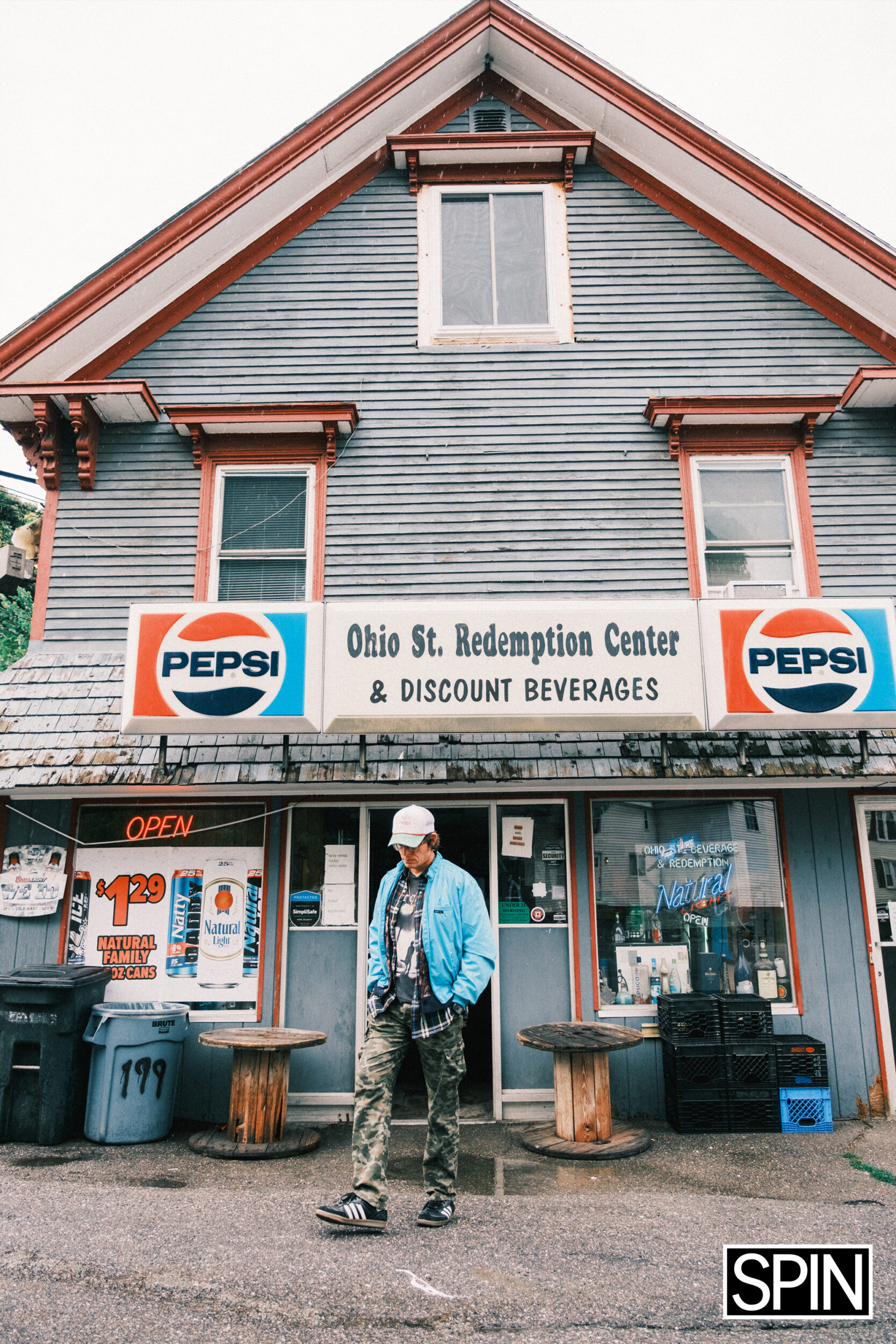
He's just back from a short set of dates culminating in a festival appearance on the East Coast, followed by a local dinner for CMA nominees. Wilson hasn’t shaken off all the miles just yet, but he’s hoping a few rounds in the ring might help. “My gym is just around the corner, so this is my little place. I usually come in here and grab a little something before I train. When I’m in town, that is.” Once a Golden Gloves contender, he no longer spars competitively. “I’m still obsessed with it, but now I just train.”
To talk with Wilson about anything—music, life, coffee, Nashville traffic—is to talk about boxing, which offers a handy analogy for nearly every aspect of life and music. Ask him how he’s handling his sudden success and juggling all those responsibilities, and he’ll relate the philosophy he learned in the ring: “The worst thing you can do is compete with yourself. You gotta take your wins for the wins that they are and move on to the next fight. You can’t start feeling like you have to outwin your last win.”
Ask him about sequencing his 2023 breakout album, Søn of Dad, and he’ll explain that “round 1 is the most important round in the fight, at least in amateur boxing.” So he chose “The Devil” as the leadoff track because its lyrics about the American apocalypse are meant to knock you off balance. He devises a gothic tableau of the Midwest, a fitting backdrop for his stories of loss, confusion, and perseverance. It’s one of the darkest country records of the 2020s, but also one of the wiliest and one of the weirdest.
It’s also been a slow-burn success story, released to glowing reviews but negligible sales. However, thanks to Wilson’s intense live shows, his inventive guitar playing, and his thorny songs about masculine vulnerability, Søn of Dad gradually attracted more and more attention, prompting a deluxe edition this year featuring a handful of bonus tracks (including his transformative cover of Ben E. King’s “Stand By Me”). While he’s not trying to outwin himself, he’s spent the year notching knockouts: touring with Hardy and Eric Church, dueting with Shaboozey for The Long Walk soundtrack, and releasing a mesmerizing covers EP featuring imaginative takes on Smashing Pumpkins, the Postal Service, and Nirvana. (Even if you’re tired of hearing “Something in the Way,” you still need to hear Wilson’s blistering version.)
Wilson finds it all baffling. “I figured I’d release this record and be done with it,” he says. “I figured nobody would give a damn about it, but at least I could say I threw it out into the universe. Whether or not it flew was out of my hands, but it turned out to have some wings. You can get real mystical real quick with all of this, but there’s something way bigger than me in this fight.”
ROUND 2
As the waitress sets his food on the table, Wilson recalls the first time he heard Tim McGraw’s “Don’t Take the Girl.” He was 15 years old, already a veteran of the ring but still a confused kid. “I remember hearing that song on the school bus, and it made an absolute mess out of me, the way it was crafted and the way it was executed. It was magic. That’s what made me obsessed with songwriting, and that’s when I knew I wanted to go to Nashville.” He grew up just a few hours north, in Seymour, Indiana, a town of 20,000 souls, and listened religiously to Nirvana, Soundgarden, and other heavy bands of the 1990s. “But there was no path to songwriting in Seymour. There wasn’t a career day bulletin for songwriting.”
He cuts up his runny eggs and mixes them with the grits. That’s not entirely true, he admits. Seymour is also the hometown of heartland rock god John Mellencamp, who chronicled southern Indiana in songs like “Jack & Diane,” “Pink Houses,” and “Small Town.”
“I’m not surprised he has become such a successful painter, because Mellencamp was painting my hometown in a very Norman Rockwell way. I was lucky enough to live in that painting and authenticate it,” he says. The Coug was a hero of Wilson’s, offering early songwriting lessons along with proof that this town could produce a vital artist. “He doesn’t pull his punches. He’s always been pretty blunt, so I learned to be pretty blunt. When I got to Nashville, I discovered that a lot of people want to wear headgear and a mouthpiece, and they want to play it as safe as possible. I wanted to go for the knockout.”
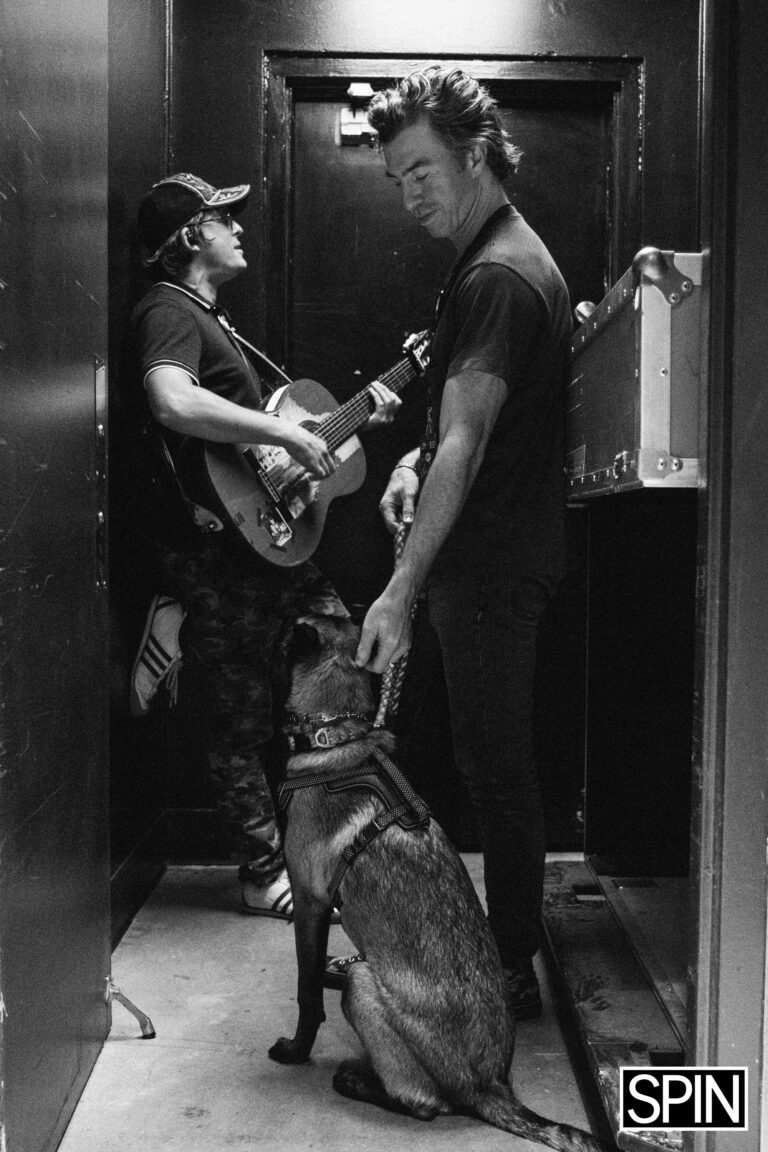
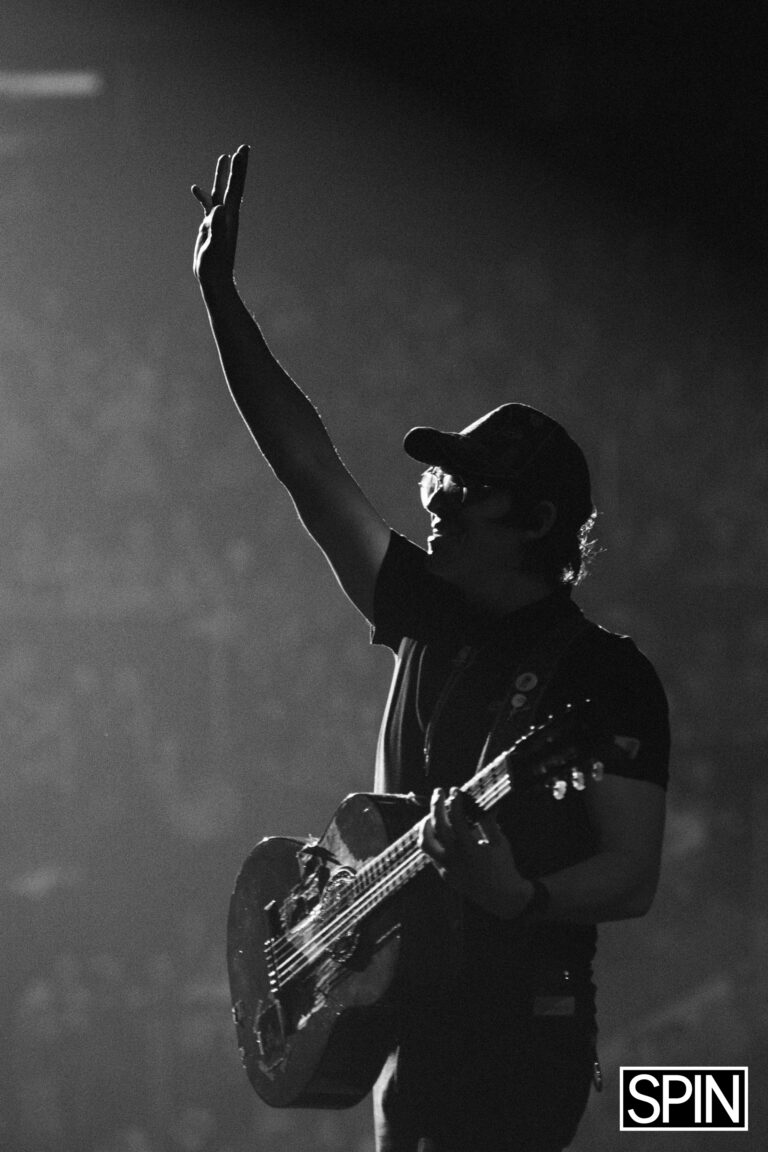
It wasn’t music that finally got Wilson out of Seymour, but microbiology. His interest in the subject was itself a form of rebellion, then became something to rebel against. “I grew up super religious, Nazarene Pentecostal. Real repressed. Exorcisms and tent revivals and all that stuff. I tried to get slain in the spirit when I was a kid, but it didn’t work. I thought the biggest middle finger I could give to that life was a science degree. I’m going to study science and prove all you crazy-ass religious zealots wrong.” After high school, he enrolled at Middle Tennessee State University, just south of Nashville, and learned quickly that “science is just a tool. It’s like a chainsaw. You use it wrong and you cut your damn leg off. It’s not an ideology. It’s a truth detection tool.”
For years he tried to balance music, science, and boxing. He worked contract gigs for laboratories around Nashville while touring in the indie rock quartet AutoVaughn. “I was the lead guitar player, not the singer or songwriter. I was kind of a shredder. It took a lot for me to come out of my shell and do that. We got to play in front of some big crowds, and as nervous as I’d get before a show, at least I knew I wasn’t going to get knocked out in front of those people. So the bar was pretty low.”
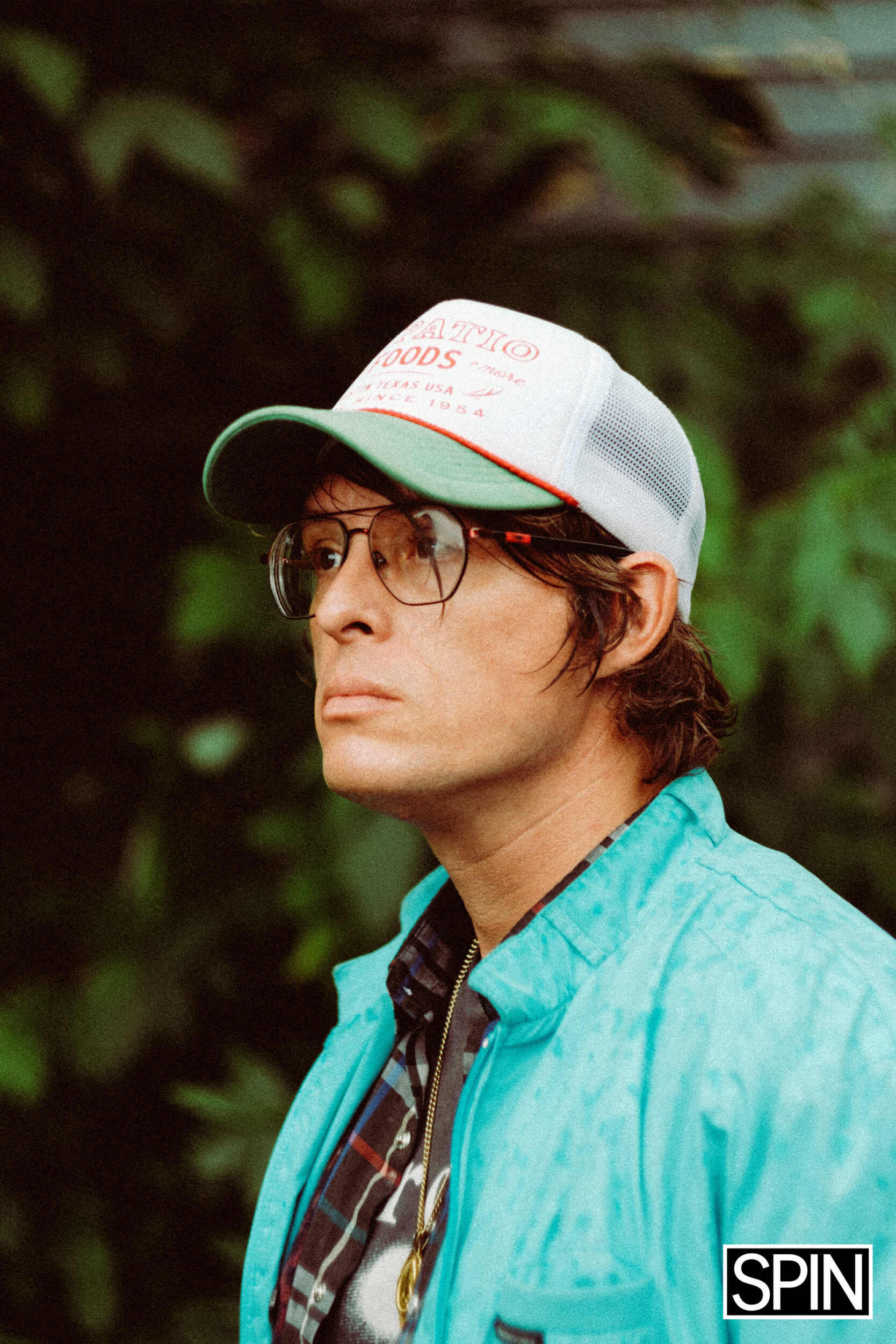
AutoVaughn ran its course and Wilson accepted a full-time job at a food company in Franklin, Tennessee. “Being a poor kid, it was the best money I’d ever seen. I worked there for four years and didn’t think of myself as a guitar player anymore. But I did start to focus on songwriting. That’s what attracted me to Nashville in the first place. The songs just wouldn’t leave me alone.” Eventually he gave up that big salary to see what he could make of himself in Nashville.
Wilson, who has co-written songs with Lori McKenna, the Brothers Osborne, and Warren Zeiders, draws heavily from his own life, not just events or emotions but details drawn from his ’90s adolescence. “I won’t forget that first girlfriend that got me into Boyz II Men,” he sings on “Year to Be Young 1994.” “Hiding in my headphones, lay on my bedroom floor.”
The year is significant: Kurt Cobain took his own life in 1994, and Wilson first heard “Don’t Take the Girl.” But Wilson’s nostalgia is never rosy. He’s not escaping to a simpler time, nor is he yelling at the kids to get off his lawn. On songs like “Year to Be Young” and “American Gothic” (“Watchin’ Days of Our Lives on a secondhand couch, nicotine-soaked wood panels of the house”), remembering is a form of reckoning. His memories can still hurt. They can still leave bruises. They still bring out the fighter in him.
ROUND 3
Stephen Wilson Sr. died in 2018 after a short illness. It’s impossible to state how hard his son took the loss. “I’ve experienced a lot of trauma in my life, but his death was by far the greatest trauma. He got me my first guitar. He was my first trainer and cornerman. He had a really hard life, but he overcame crazy odds just by persevering. That’s something I got from him, just learning to hang back.”

He immediately started writing songs about his father and their rocky relationship: thorny, unsentimental songs like “Father’s Son,” which enumerates the many ways Jr. rebelled against Sr. along with the many more ways that rebellion strengthened their bond. Over a gut-string guitar theme, Wilson sings in a ragged voice: “I wear his blue-jean jacket and his name like a badge of honor. I used to hate being called Junior, now I don’t mind any longer.”
With his split of his father’s life insurance policy, Junior started recording and releasing those new songs. “We did it all on the cheap and recorded until the money ran out. It was a desperate attempt to keep him alive.” When “Year to Be Young” went viral on TikTok, it brought in enough money to record even more songs. He knew he wanted to make a double album, a statement record, something akin to a monument to his father. Søn of Dad examines their tumultuous relationship as cornermen and rivals, but it also considers the nature of loss and life. “I miss my father every day, the kinda pain I pray don’t fade away,” he sings on “Grief Is Only Love.” “I don’t feel like crying, but I just keep crying.”

It’s the sound of someone processing unfathomable loss in real time, and Wilson’s disdain for pat reassurances and cheap platitudes—of the everything-happens-for-a-reason or God-works-in-mysterious-ways variety—makes his songs intimately, deeply relatable to anyone who has lost someone important. Which is just about everybody. “When I made that record, I felt like a scientist keeping track of his findings. I had a hypothesis, and I got to test it against the world. Now I have all these results. But what I think I learned is that if I’d just been a scientist when my father passed, I would’ve repressed it, not had any way to express myself. So I’m grateful I have this outlet.”
That may actually be the secret to the album’s longevity and to Wilson’s grassroots success. His findings are persuasive, which is another way of saying his battles all sound hard fought, his triumphs hard won, his conclusions just plain hard. He’s already been living with these songs for years, and he’s resigned himself to playing them 150 times a year for the rest of his life. “It’s still very painful. I won’t lie. It’s utterly exhausting. I’ve had breakdowns onstage singing these songs, and I’ve seen grown-ass men bawling their eyes out during our shows. But if they’re willing to go there, why can’t I? It’s a cycle of healing that I’m grateful to be a part of. It definitely feels like a bigger mission than, ‘Oh, here are some bops.’”
Wilson gulps the last of his coffee and asks the waitress for the check. He’s anxious to get to the gym for his first training session after too long on the road. “This guy trains real fighters, so you don’t mess with his time. He’ll kill me if I miss this session.”
As he settles up, he offers one final boxing analogy: “I’ve spent my lifetime learning how to stay out of my own way. That’s a skill in itself, not suffocating your own fire. So I’m ready. I feel like I’ve been training for this stage for a long time.”