
That’s when singer Ellie Rowsell suddenly cries out: “Ahhh!”
For a split second, she is completely terrified and recoils as a black, beetle-sized intruder travels across the carpet near her feet. The scene is like one of those prank videos that interrupt your morning death scroll on the phone, where some poor bystander is abused by the appearance of a fake spider, plastic snake, or some other primal fear. Except this time it was just me, allowing my bottle cap to fall to the floor.
“Oh, I thought it was a beast, but it was the lid rolling along,” Rowsell says with a relieved smile, relaxing into her chair as her bandmates chuckle. She remains calm for the next hour.
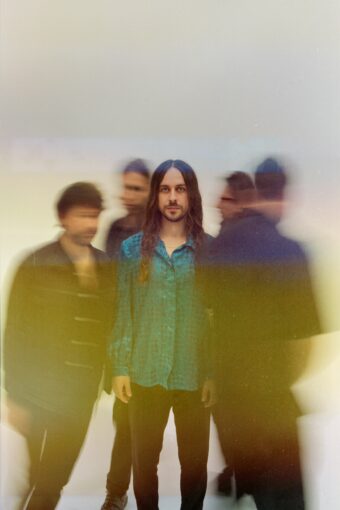
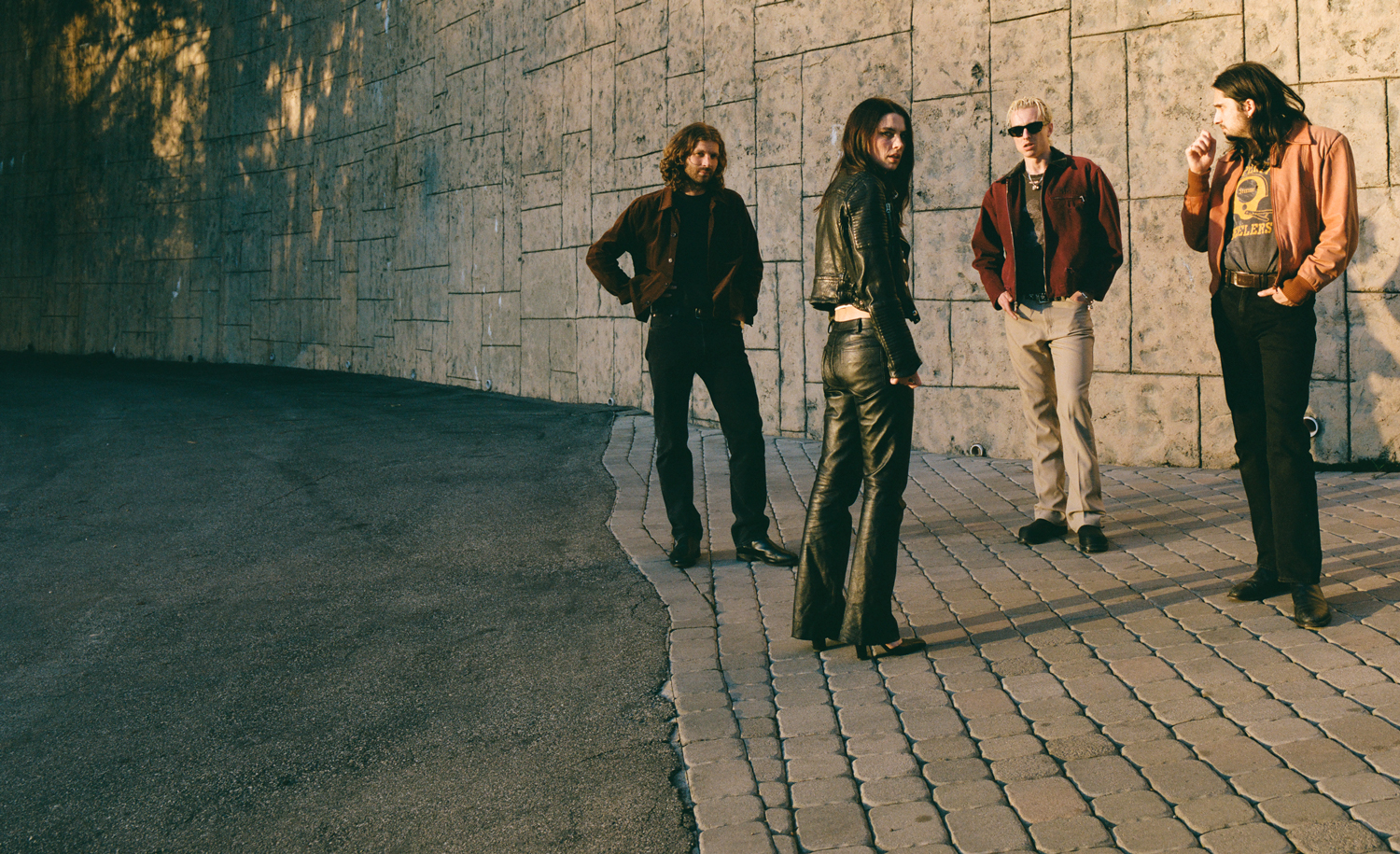
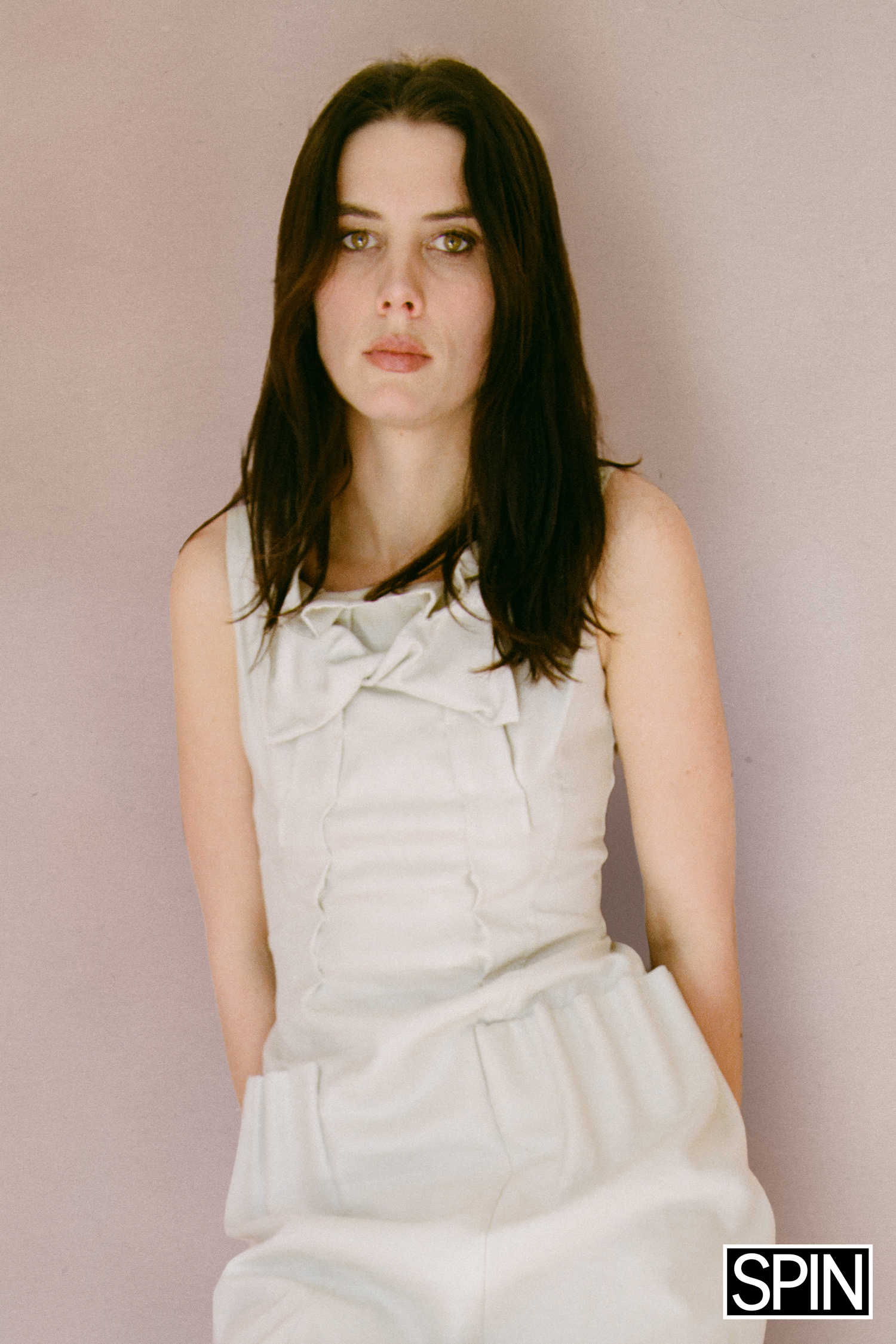
From all appearances, these four seem to still enjoy each other’s company, with a comfort level and ongoing excitement about their band that is contagious. With an ambitious new album, The Clearing, about to drop, they also continue to lean forward in their music, stretching out on some new songs such as the effervescent “The Sofa” and the shimmery, alluring “Bloom Baby Bloom,” with a music video showing a sparkly Rowsell amid a company of rehearsing dancers living out a kind of Fame/All That Jazz/A Chorus Line moment.
Recorded in Los Angeles, The Clearing is their first for Columbia/Sony Music, after three albums with U.K. indie label Dirty Hit. They’re ready to see what a major label can do.
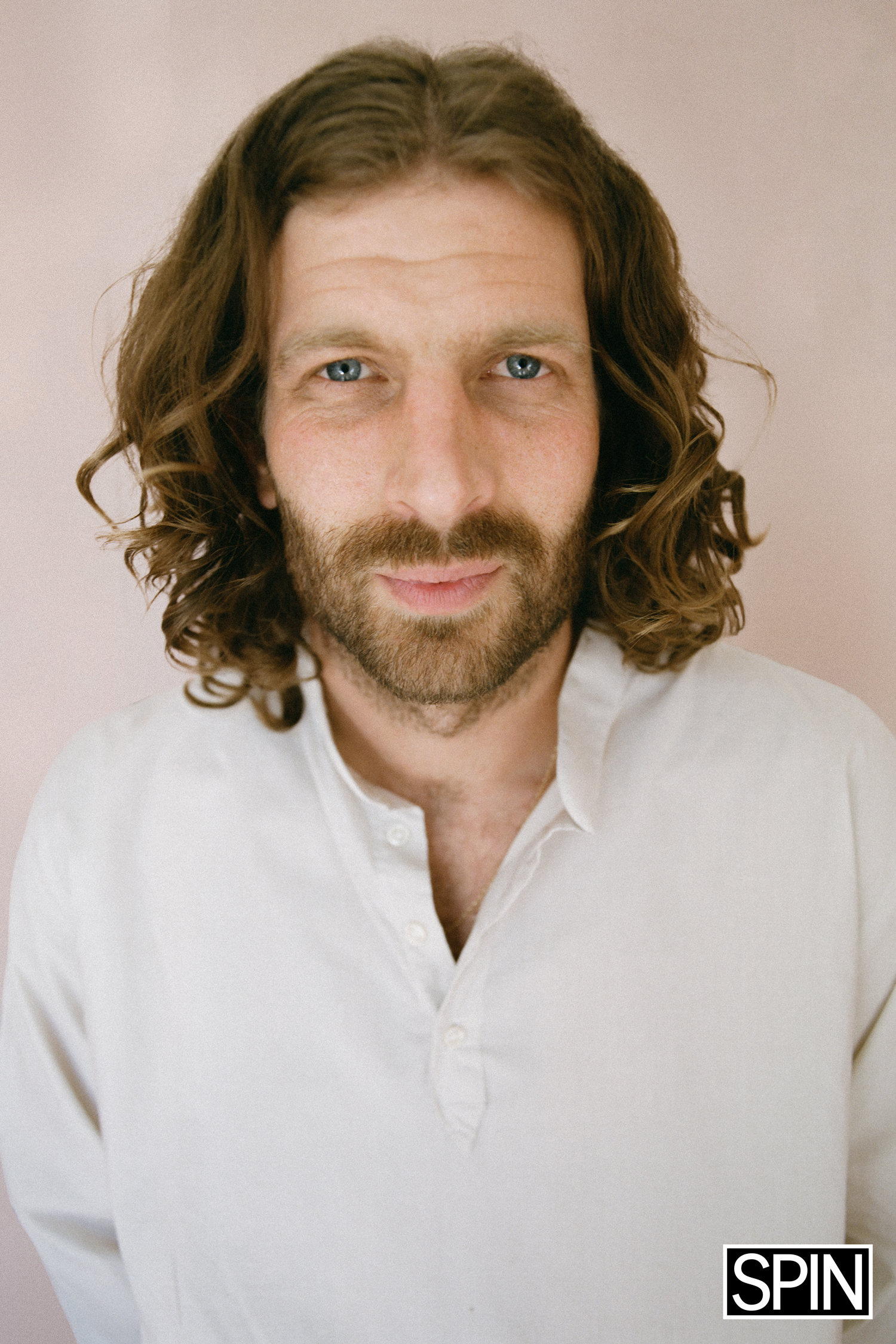
The band members around the table sound pleased to be here: singer-guitarist Rowsell, in salmon-colored camisole and corduroy trousers, feet up on her chair and safe from bugs and bottle caps; guitarist Joff Oddie, now bearded and shaggier than before; bassist Theo Ellis, in platinum hair and tattooed arms; and drummer Joel Amey, bearded in blue denim and a snug T-shirt.
This time, Wolf Alice recorded in the studio with Greg Kurstin, the Grammy-winning producer of Adele, Beck, and Foo Fighters, with a long resume of hits and modern classics with a staggering range of artists from Lily Allen to Gorillaz, Pink, Paul McCartney, Kendrick Lamar, Flaming Lips, and Sia. Oddie first thought to collaborate with Kurstin on the last album, but it didn’t work out until The Clearing.
In the past, the guitarist had always believed that most producers fell into different categories—that they were either good engineers, gifted musicians, or strong songwriters, but Kurstin is different.
“Greg is seemingly at the top of the tree of all of those,” Oddie says. “He’s just an incredible songwriter, one of the best musicians I’ve ever seen. And technically he’s just fantastic in his studios. It’s such a privilege to be able to work with someone of that kind of stature.”
They were in L.A. working together for three months, coming in five days a week, starting mid-morning and usually ending for the day by 7 p.m. On the first day, the band made some quick progress with their first attempt, the swampy groove of “Safe in the World.” It was a good sign.
“When you start hearing something back in the first week that you really hoped and dreamed you would hear, it’s really exciting for where you could go next,” says Amey.
Some songs were composed back in England over a period of months before bringing them into the studio in L.A.
“People talk about a song that just comes to you and it feels really amazing, but that’s super rare,” says Rowsell. “I’m kind of acknowledging that things take time and a lot of effort and need work. So you would sit down and write a song, and then instead of being like, ‘Right, I’ve done it,’ in a week or so, I’d be like, ‘How do I make this better?’ That’s how that is now.”
That said, when she finally has a song written and demoed to her satisfaction, it’s an especially good moment loaded with promise. “The best feeling for me is when you have a demo and you keep listening to the demo,” she says. “It’s being like, ‘OK, this is good because I keep listening to it.’ Everything after that, it’s quite hard to know whether it’s finished or whether it’s good. There’s so many ways to skin a cat. It is quite hard to have that feeling of, like, ‘Ah, this feels amazing, it’s done.’”
By the time a song appears on a Wolf Alice album, it’s gone through the wringer and back again, says Oddie. “Things have kind of been constructed, deconstructed, put back together, recorded, done in different versions, and then finally get a rendering at the end,” he explains. “It’s a hell of a lot of editing.”
A lot of Rowsell’s songs are inspired by real life, but even when she’s writing an angry tune, she’s more likely to be laughing than gnashing her teeth as she sketches the words out. There are some especially sharp edges in the lyrics of album opener “Thorns,” amid lush waves of keyboards and a soaring psychedelic swirl, as Rowsell sings in a warm inviting timbre in contrast to the message: “Did you have to take the knife out? … Would the wounds have healed had you not wrote the words down?”


Getting vocals recorded to her satisfaction is the next challenge. “It can be really hard,” Rowsell says. “You want to inject an emotion into it, so you’ve got to get into the right head space. And it’s a bit confusing sometimes when you feel like you’ve taken a really good take and then you listen back to it and it doesn’t have any emotion and you’re like, ‘Well, how do I get it then?’ So it’s all really complicated.”
Her voice has evolved over time, stretching from the band’s early folk and rock songs to a shimmery sensual pop sound that would have fit in a ’70s discotheque. Her most comfortable place used to be quiet and soft, as it is again on the new album’s piano ballad “Play It Out.” But she can do more now, and trained herself partly by doing private impressions of other singers, from Patti Smith to Billie Eilish. “Doing impressions of other vocalists changed my way of singing and writing. It is weird,” Rowsell says. “When I was doing Patti Smith, I was like, ‘Oh my God, it feels so weird in my throat.’ I expanded my knowledge of physically how to use my voice.”
England’s The Independent recently declared Wolf Alice “Britain’s foremost guitar band,” but the four group members are shy about claiming such a title. Asked about it, they all laugh. “Well, I think we’re too English to say, ‘Yes,’” Oddie says. And Ellis shakes his head with a grin, “Yeah, that would be fucking crazy.”
They do agree that guitar music is having a real moment of intense interest in their home country, partly due to the reunion of Oasis. With a full calendar of sold-out stadiums around the world ahead of them, the Gallagher brothers have already unleashed an unexpected season of guitar worship for generations of fans, many of them not even born when the first Oasis hits landed.
“They’ve got incredible songs. And I think (with) them coming back, they’ve got a huge generation of really young fans. That’s pretty cool that people have been exposed to guitar music like that,” says Ellis, who adds that seeing a vibrant rock act like Amyl and the Sniffers at Glastonbury this year, and Fontaines D.C. last year, among many others, has been inspiring. “I remember going around and being like, there’s a lot of bands at the moment and that’s really nice to see. It does feel exciting.”
They see the impact of guitar bands in other corners of music too, as even pop artists adopt elements of rock culture into their mix, says Oddie. “You see the big pop stars and they’re presenting like a rock band—Olivia Rodrigo and Sabrina Carpenter and Chappell Roan—it’s all kind of around this live band thing. It seems to have permeated that bit of culture. I don't know what that says.”
Most of Wolf Alice still live in North London, though Amey is down the coast a bit in Hastings. But Los Angeles has become a frequent and welcome destination. In a few hours, they would be onstage for the first of two nights at the 500-capacity Troubadour, just minutes away from their hotel, and they’re in town a few more days for radio interviews and an appearance on Jimmy Kimmel Live! to play the single “Bloom Baby Bloom.”
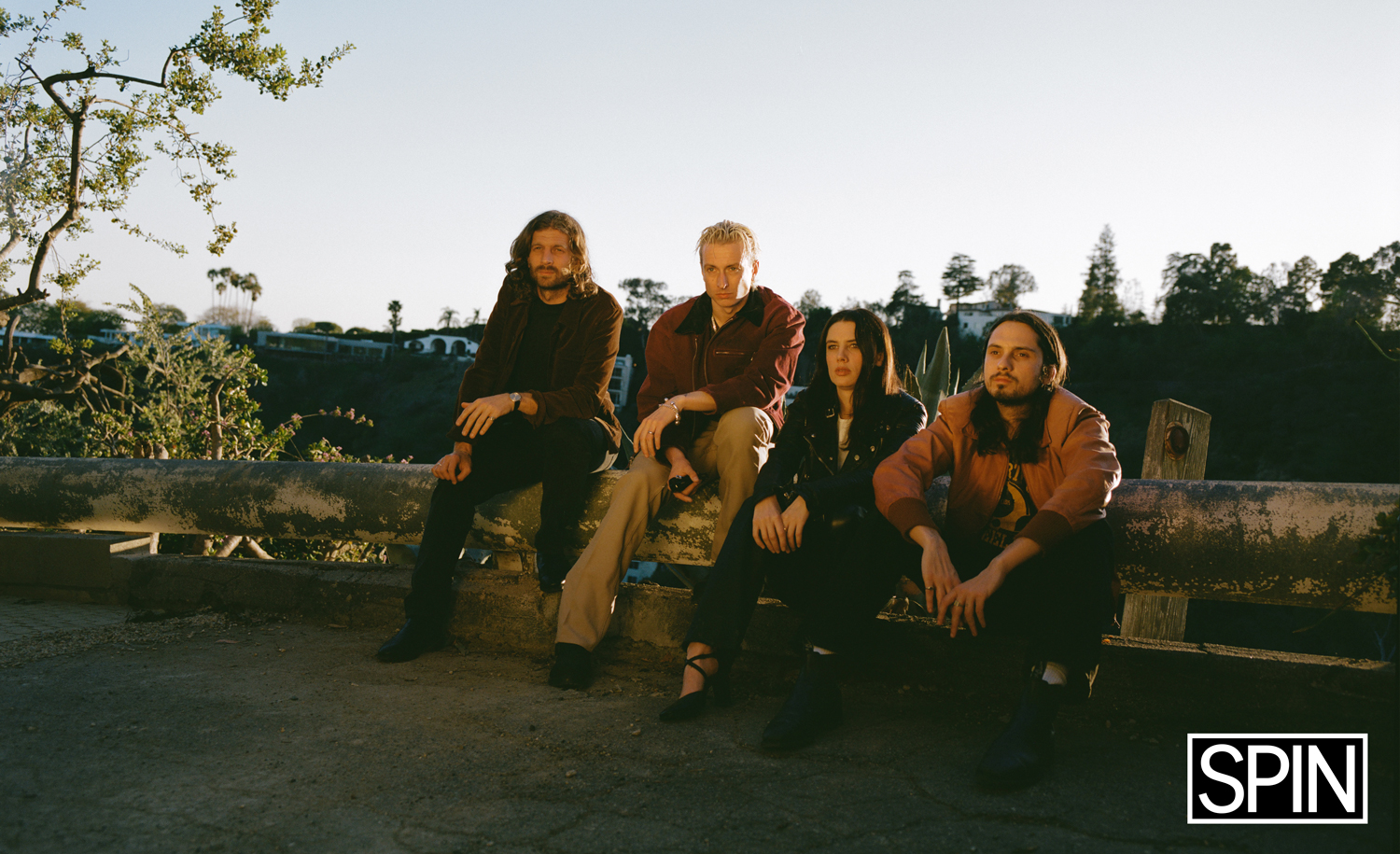
Back in January 2015, Wolf Alice’s very first U.S. tour was just three dates—two in New York, plus their debut in Los Angeles. During that first visit to New York, the Londoners saw urban parallels with their home town, but L.A. was very different. “I definitely remember being like, ‘Whoa, this is crazy,” Rowsell says, laughing.
Ellis adds of that initial visit, “My early memories of L.A. are some of my best memories of my life.
“Everything smells like sage. There’s these crazy motorways everywhere. There’s the desert, there’s the mountains, and there’s the sea. And it’s got the kind of movie aspects where it’s stuff that you’ve only seen on a screen.”
Wolf Alice recorded their second album, Visions of a Life, in the city, and lived for a couple of months in Echo Park. “That was just so fun, being 25 and making an album in L.A.,” Ellis recalls. “L.A. has such music romance to me. It’s got amazing studio history and there’s so many great musicians everywhere. People really have a reverence for music and they’re quite protective over it, which I don’t think is necessarily the case everywhere else.”
At one time, they were staying just steps away from the Hollywood Walk of Fame, where the sidewalks are famously decorated with plaques paying tribute to stars of film, TV, radio, and music. And just like on the Tube back in London, they’ve used L.A. public transportation without hesitation. That includes a Metro subway system running underneath the car-obsessed metropolis that a lot of locals seem unaware even exists.
Wolf Alice have spent enough time in L.A. to identify a couple of favorite spots in the neighborhoods of Hollywood and Los Feliz “to get wings and drink Bud Light,” says Ellis. “If we’re having a crisis or a good time, we go there.” There’s also the Hollywood Reservoir up in the hills, to commune with nature and the deer population, right in the middle of the city.
So coming back to town to make their newest album was an easy choice, fulfilling the creative impulses of each one of them.
Near the end of The Clearing, the album shifts into “White Horses” with a slippery acoustic guitar riff, and a breathless lead vocal from drummer Amey: “I don’t need to solve my unknown identity / Just need an answer to the question in the taxi.” Then from Rowsell comes a searing vocal counterpoint, turning the song into a duet as she wails with echoes of Sinéad O’Connor: “Know who I am, that’s important to me / Let the branches wrap their arms around me.” It’s cosmic pop with an irresistible chorus.
The song was written by Amey, his words inspired by recent revelations of his family history, which stretches back to the small island of Saint Helena in the South Atlantic Ocean, a place still best known as the final home of the exiled Napoleon Bonaparte. He says his mother and aunt were adopted, and didn’t know where their birth mother was from “until a few years ago in their 70s.”
“It’s strange for me to speak about a song that I’m singing,” the drummer says. “I’ve done it before on the first album, but it’s still quite a unique experience for me to be speaking about it. I see it very much as a duet and as a Wolf Alice song rather than a me thing.”
Wolf Alice is the kind of band where each of its four members are encouraged to stretch out creatively. “Everyone here writes music, amazing music,” Amey adds. “We will then get together and work out, ‘How is this a Wolf Alice statement?’ Everyone has written amazing parts on this record.”
With their fourth record now complete, and with a full decade and a half behind them, Wolf Alice have been around long enough to hear of fans and newer acts calling them an influence. “People have grown up with us a little bit—which, one, makes you feel old, but, two, is really lovely to hear,” Rowsell says, noting the lasting impression favorite bands made on her. “I remember that feeling when I was younger and it doesn’t leave you.”
During some of the teen years of the band members, there was an annual event called the Underage Festival, held in Victoria Park, London, starting in 2007. It was open only to kids between 13 and 17, who were generally too young to attend shows at rock clubs. The show hosted a wildly eclectic lineup of rock, pop, indie and hip-hop—from rockers the Gallows and Horrors to singer-songwriter Patrick Wolf and the grime MC Dizzee Rascal.
“It was really bonkers,” Ellis remembers of the festival, which lasted until 2011. “And this thing lasted such a short period of time. That was really important to me.”
“Whatever happens in that teenage period really crystallizes” your tastes and expectations in music, Ellis adds. “I found that to be the most powerful period of creative discovery. I’m always chasing that feeling half the time with music.”
Hours later, Wolf Alice is onstage at the Troubadour, the legendary SoCal nightclub and site of six decades of music history, from Elton John and the Eagles to Guns N’ Roses and Radiohead. Rowsell has arrived in a tiger-print leotard, white knee-high boots, glitter on her eyelids. “Bloom Baby Bloom” is painted onto Amey’s kick drum.
The old club is filled with a cross-section of superfans, press, friends, and L.A. music industry people. The Wolf Alice set lasts more than an hour, and stretches across their catalog, as Rowsell purrs through the newest songs and then leaps into the crowd to rip into the punk rock of 2014’s “Moaning Lisa Smile” on the dancefloor.
The encore begins with “Thorns,” that new subversively alluring tune with pointed lyrics: “Maybe I’m a masochist / the sun goes down, the curtain lifts / and I sing a song.”
As she explained back at the hotel earlier, “Thorns” concerns the common practice of putting your most excruciating personal experiences into a song for the world to hear and dissect. “Like, why does one put themselves through that?” Rowsell asks, wondering about herself and others. Taking the song onstage only intensifies that idea, even as it frees up a singer in ways real life maybe can’t.
“I like shouting on stage. I don’t like shouting in real life,” Rowsell says happily. “It’s like how people tell you to go and scream into a pillow. When you’re a musician, you’re kind of allowed to do that on stage. The stage is your pillow, if you can let go a bit. Shouting is quite fun.”