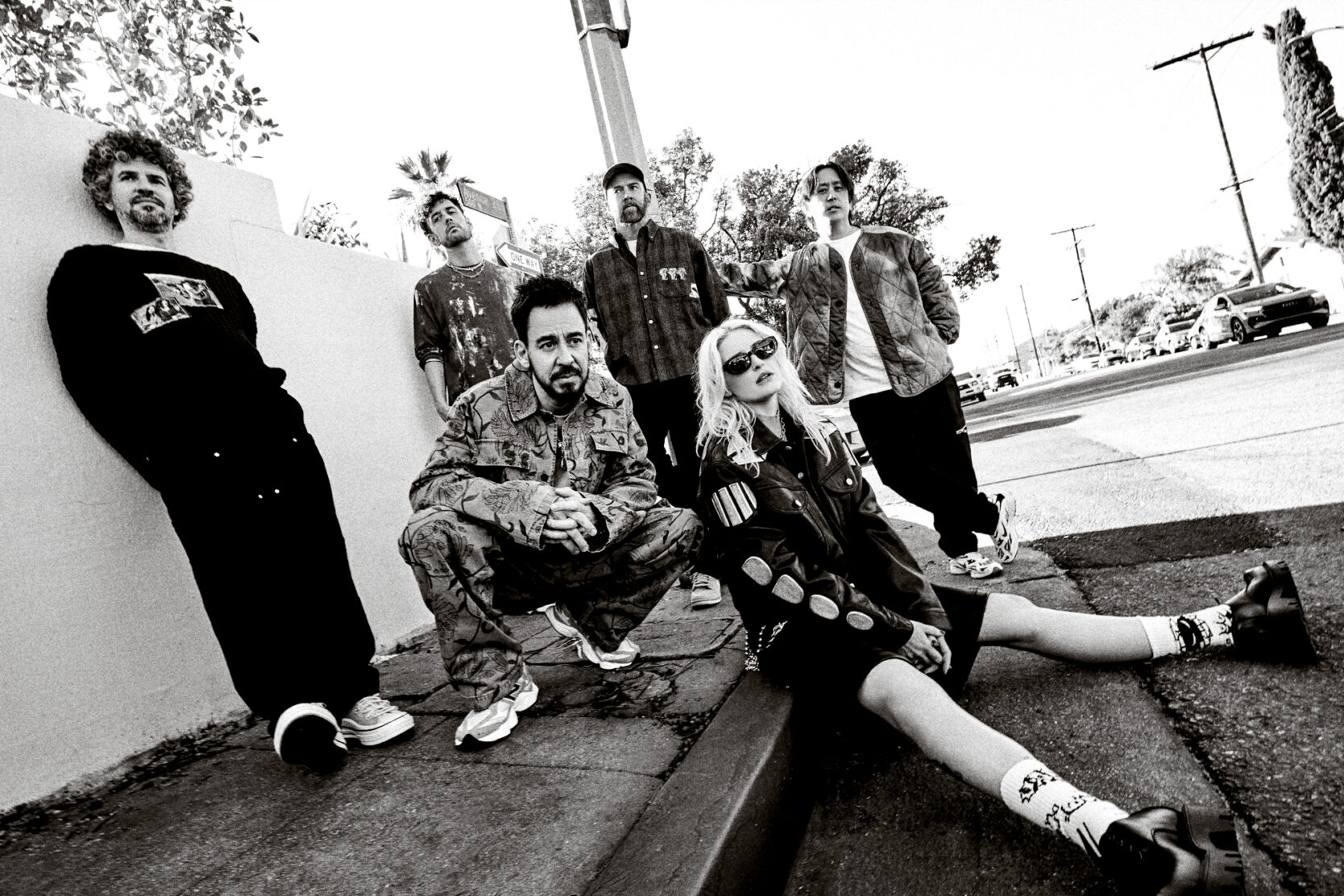
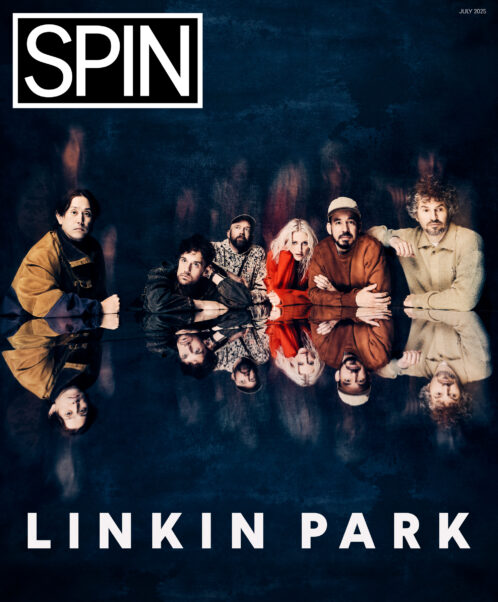
That was at the Forum in Los Angeles, on Sept. 11, 2024, as Linkin Park performed for nearly 18,000 hometown fans, who seemed overjoyed to see them back in action, colliding metal riffs with hip-hop, electronics, and soaring melodies. They chanted “Linkin Park! Linkin Park! Linkin Park!” and shouted along with Armstrong to the band’s biggest hits and a new song, “The Emptiness Machine,” fully accepting this new singer as one of their own.
Trading screams with rapper-bandleader Mike Shinoda’s calmer rhymes, Armstrong echoed the dramatic back-and-forth Linkin Park had trademarked with the late Chester Bennington, as she sang out: “I let you cut me open / Just to watch me bleed / Gave up who I am for who you wanted me to be / Don’t know why I’m hoping / For what I won’t receive!”
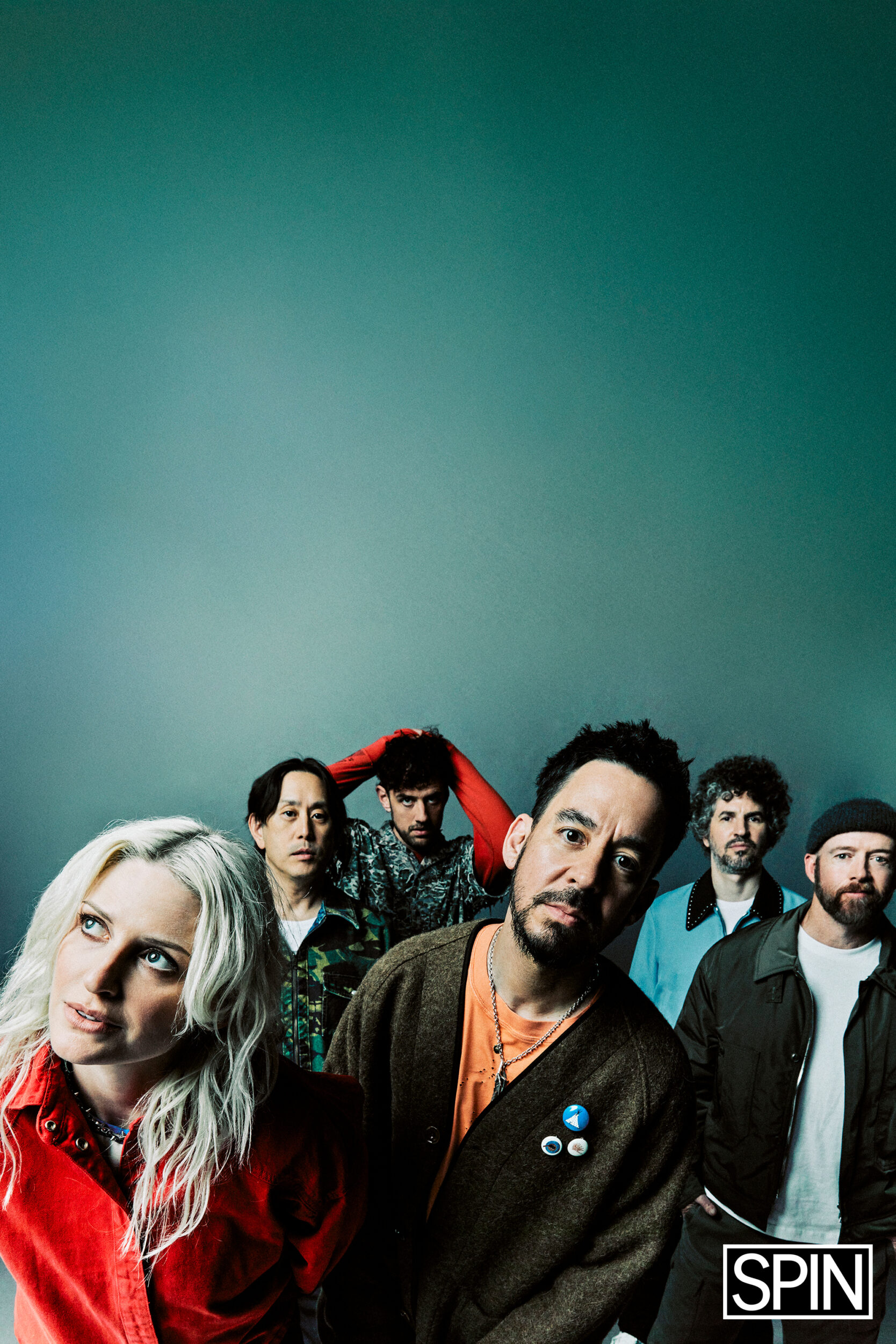
Looking back now, after several months of touring major venues around the world with Linkin Park, and the November release of their first album together, From Zero, she remembers her first live dates with the band as an exciting if disorienting blur. “It was just like too much thinking and too much adrenaline and just, ‘Okay, calm down, calm down,’” she says. “It was a lot of adjustments, a lot of things in your head just telling you ‘Do this, this, this, this, this.’ It’s all coming into play, all that practice for a year, and it all shows on the stage.”
And, she adds, “It was really fun.”
“I remember giving all my energy. It was a really nice start, but we were also like, ‘Okay, let’s get out of L.A. Let’s get going.’”
Everything about touring with Linkin Park was on a massive scale—performing on a sprawling high-tech stage, flying to gigs, staying at nice hotels, with a large road crew to support the band’s every need—but she wasn’t exactly new to rock and roll. Emily had won many admirers among her musical peers from years fronting the L.A. alt-rock band Dead Sara, for her fiery vocal gifts that shifted easily from tender to explosive.
It turned out one of those admirers was Shinoda.
Successfully replacing a lead singer in a rock band is always a kind of miracle (AC/DC and Alice in Chains among the few to pull it off). Shinoda and Linkin Park made a bold choice in Armstrong for that role—a powerful female voice rather than a safer and lesser Bennington clone—and it turned out to be a stroke of genius. From Zero (11 songs clocking in at 31 minutes, tight as always) was largely embraced by the band’s audience, got some rave reviews, and landed at No. 2 on the Billboard 200. The singles “The Emptiness Machine” and “Heavy Is the Crown” became immediate hits on streaming and rock and alternative radio.
The just-released and so-called “Deluxe Edition” of From Zero adds three additional songs, including the roaring single “Up From the Bottom,” already a popular addition to the setlist on the band’s world tour that will keep them busy into 2026.
To the public, the return of Linkin Park happened without warning, beyond a few scattered, hopeful comments since the trauma of Bennington’s suicide in 2017. Nothing was publicly known about Armstrong being involved.
It remained a secret through an intense year of recording and rehearsing with the singer, leading to an invitation-only performance a week before the Forum show for fan club members on a local soundstage, streamed live around the world. “It’s good to see you again,” Mike said to cheering fans, sounding awfully casual, given the high stakes of this reintroduction. That same day, Linkin Park revealed the imminent release of a new album and an arena tour.
“We were optimistic. We bet on ourselves, but it was all unknown basically,” guitarist Brad Delson says now of the comeback project with longtime band partners Shinoda, bassist Dave “Phoenix” Farrell, and turntablist Joe Hahn. “Committing to making the album, putting these shows up, was a real act of faith.”
As an original member of the band since the very early days, then called Xero, Brad remains a key creative force within Linkin Park. But during the band’s long hiatus, he decided he no longer wanted to tour. While his playing and influence continue in the studio and behind the scenes, the guitarist’s position onstage is filled by Alex Feder, “my touring doppelganger,” Delson calls him.
There were other changes too, including the exit of founding drummer Rob Bourdon, replaced on From Zero by Colin Brittain.
“There were definitely moments where I was like, ‘Oh my God, I hope this works.’ My stomach was in knots,” says Shinoda, bearded and relaxed, hours before a show in North Carolina. Linkin Park’s first rehearsals for any tour were traditionally “rocky” and “a mess,” he says, as band members labored to reconnect with the songs. With Armstrong and Brittain now stepping in, he could only imagine things being more difficult, and admits, “It was really jarring.”
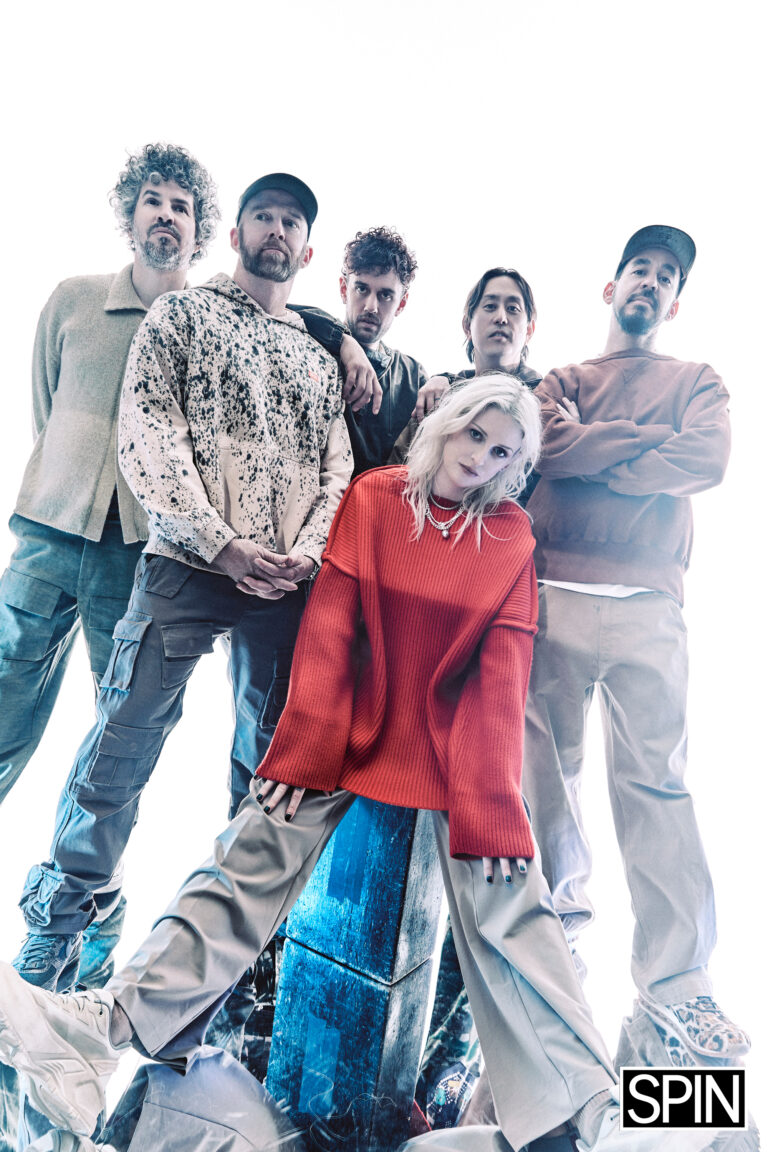
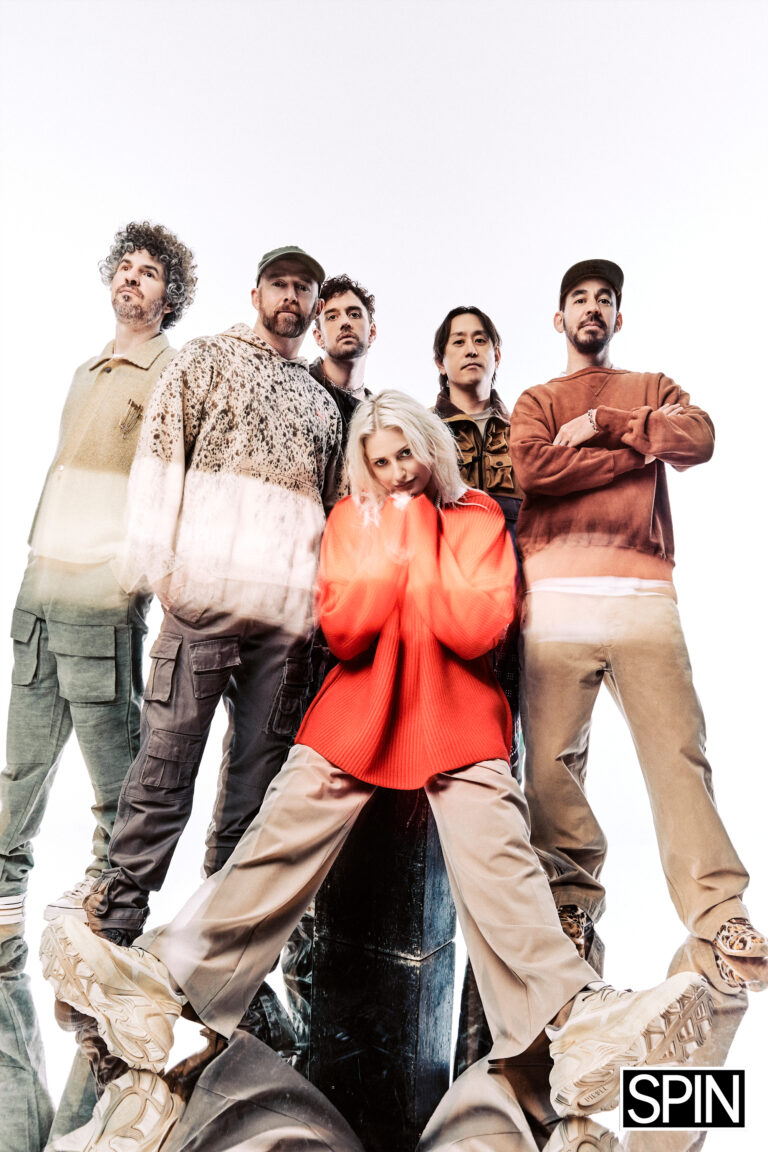
“Thankfully, we never had any moments where personality-wise it got rocky,” he adds. “That was really telling. As we rehearsed, the stress was high and everybody really knew there was so much on the line. Everybody wanted it to work so badly, so even when we were fumbling our way through songs for the first time or trying to figure out parts, everybody was really committed and patting each other on the back, and trying really hard.”
The roots of Linkin Park stretch back to suburban Agoura Hills, California, (just north of L.A. city limits) where Brad began working with Shinoda and then-singer Mark Wakefield in December 1996. As Xero, the new band had already developed a sound that Delson now recalls as “instantly unique and recognizable.”
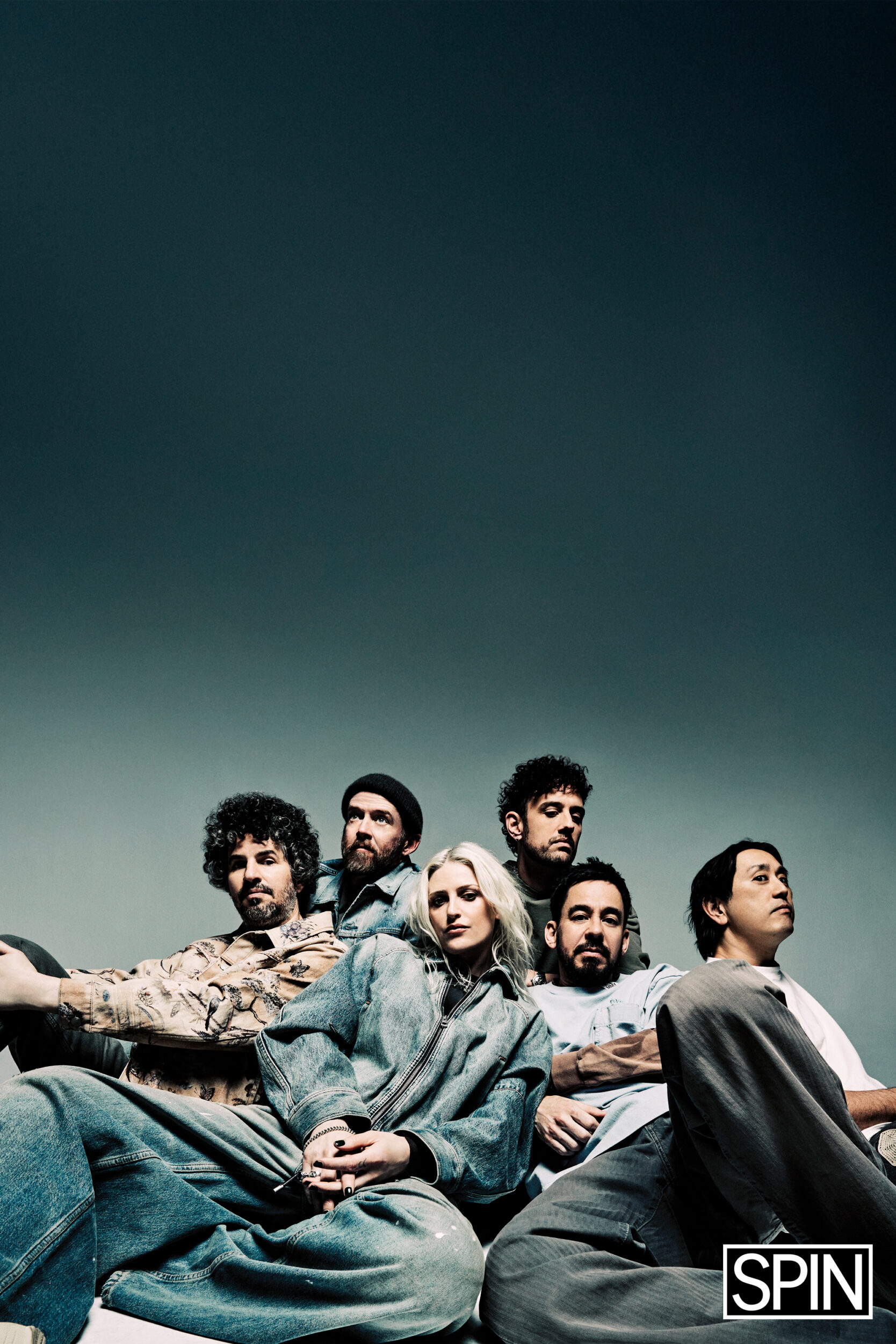
The band emerged during the rise of nu-metal, and shared elements of hard rock, rapping, and turntable effects, but Linkin Park brought a new energy to this hybrid theory, minus the macho posturing of so many others. Delson says they crafted their blend toward “what felt natural to us, having grown up on all of those genres and wanting them to be intertwined, to combine them in a way that hadn’t been combined by others. That was the driving artistic resolve or raison d’être to even starting out.”
Linkin Park’s 2000 debut, named appropriately enough Hybrid Theory, was an explosive hit, with songs filled with rage and contemplation, frustration and release. It ultimately sold more than 12 million copies just in the U.S., and went multi-platinum across Europe. It was the beginning of a nearly two-decade winning streak, which only came to a stop with the death of their lead singer.
In 2018, Mike released his first solo album under his own name, with the self-explanatory title Post Traumatic. It was raw and emotional, and a sign of creative life from the Linkin Park leader, grappling with the loss of a friend and the unknown of what to do in the aftermath. That struggle could be heard in the hip-hop track “Over Again,” which recounted the experience of performing at a Hollywood Bowl tribute to Bennington three months after his death.
Alternately raging and mournful, he raps over the understated track: “My body aches, head’s spinning, this is all wrong / I almost lost it in middle of a couple songs / And everybody that I talk to is like, ‘Wow, must be really hard to figure out what to do now’ / Well thank you genius, you think it’ll be a challenge? / Only my life’s work hanging in the fucking balance.”
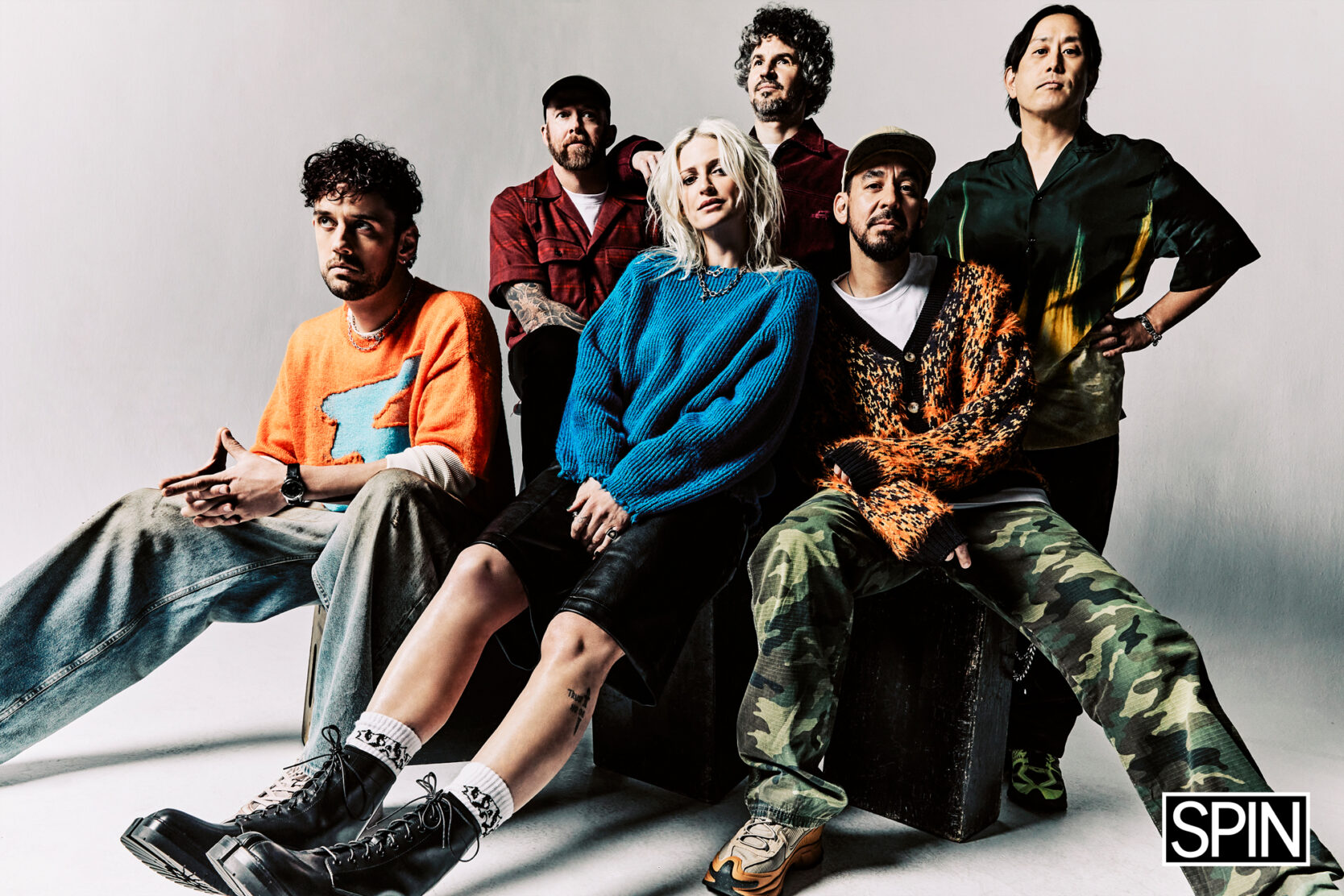
As Linkin Park’s leader and most diligent band member, the least surprising revelation was that Shinoda would find a way back. But as he released his solo album, that still seemed far away. That year, he told the Los Angeles Times, “My gut is that I want it to work out. I’ll be looking for ways for it to work out.”
The following year is when work toward rebirthing Linkin Park began. Armstrong first came to Shinoda’s studio in 2019 to co-write and record. An invitation to officially join the band was still years away. Other voices and players also came and went.
The process was careful and deliberate. Figuring out this puzzle of grief and expectation would take time. As a group that began with two singers, Linkin Park could have continued with just Shinoda at the mic, or recruited multiple vocalists, or leaned on backup singers. Suggestions of a holographic singing partner were quickly shot down. COVID also interrupted things.
“With Chester, I was used to working with someone who I could give any vocal idea to and he would be able to handle just about anything,” Shinoda says.
Finding that again was a challenge. “Every week I’d do a few sessions with different singers, different writers, and I’d go to that place: ‘Oh, I have this idea. Can you sing this?’ They’d sing it, and I’d be like, ‘Ah, hmm, interesting’—not ‘Wow, insane.’ Then I met Emily and I did that process with her and I was like, ‘Oh, we’re back to almost unlimited.’ She doesn’t sound like Chester; she sounds like Emily. But I won’t run out of things to try because she can just do it all.”
Linkin Park’s final album with Bennington was the pop-oriented One More Light, which hit No. 1 in the U.S. and the Top 10 around the world, amid, however, lukewarm reviews. Shinoda says that album was the third in a diverse trio of releases that shifted gears dramatically, and challenged listeners about what a Linkin Park album should sound like. The previous album, 2014’s The Hunting Party, was their heaviest ever, with slabs of punk and metal guitar.
In that, Linkin Park were following a lesson learned from working with producer Rick Rubin, starting with 2007’s Minutes to Midnight.
“There’s no rules,” Delson recalls of Rubin’s message. “You don’t have to do things the way you did them before. You don’t have to do things the way other people do things. You get to choose.”
Regardless, seven years after going silent, Linkin Park resurrected itself with a return to certain fundamentals from the band’s sound.
“After Chester passed and we went through all of the different feelings and phases,” Shinoda explains. “Naturally we came back to the core of: ‘Okay, no bullshit, who is this band? Who are we?’ And you get a different answer when you look at things that way.”
Several songs were far along before the band settled on multi-instrumentalist Brittain behind the drums, and Armstrong on vocals. The new singer was a known talent but no hits beyond the psychedelic, grungy “Weatherman” from Dead Sara’s 2012 self-titled debut album.
Like most rock acts playing clubs and small theaters on the road, Dead Sara was a classic guerrilla operation, usually touring by van from city to city, living out of a suitcase. Dead Sara’s Instagram page still includes the ironic boast: “World’s greatest opening band.” Armstrong wasn’t yet a famous name to the masses, but anyone who witnessed her perform live—with her band or at a series of L.A., all-star tribute shows to Fleetwood Mac and Tom Petty—knew her as an exceptionally powerful vocalist, from a whisper to a scream.
“In her own way, Emily has that vocal and emotional range where it can be the scariest, heaviest thing or obviously kind of beautiful and tender,” says Brad. She brings a sound and personality that the guitarist says naturally fits with the band’s DNA.
Delson had last worked on a Linkin Park project in 2023, completing a song begun during the One More Light sessions, with vocals by Bennington, to close the retrospective Papercuts (Singles Collection 2000–2023). While Shinoda, Phoenix, and Hahn had begun working on music for a potential new Linkin Park project in 2019, Delson says the bulk of his work on From Zero happened the first six months of 2024. “I was going to Mike’s house almost every day for months last year,” he says.
“And once we had a deadline, we made this bold decision as a group to build the launch show, to build the stage, to book arenas, to book stadiums—all before anyone had heard a lick of music. So it was a very risky thing to do. And we had incredible deadlines that all could have gone awry. We were miraculously able to keep Emily’s identity a secret, which built even more tension into the launch.”
During Armstrong’s recording sessions and rehearsals for the tour, she saw just how tight Linkin Park was as a live playing unit. “I had to step up big time,” she says. “It’s like all of a sudden you’re with the professionals that have been doing it and have huge hits and it’s like, ‘Okay, wow, I have to become the best version of myself all the time.’ Just to be there in their presence, I was learning so much.”
As she talks, sitting on her hotel balcony ahead of the night’s show, the blonde singer is relaxed in sunglasses and a coffee-colored athletic jersey. “It was very challenging at times and it still is, but I’ve gotten to a place where I feel like I can sink my teeth into it very well,” she says. She notes the support she immediately felt from audiences. “I’d only heard stories from the band. Even though they described to me just how protective and supportive they are, it’s completely different when you see it in real life and you feel it. It’s like, ‘Oh shit, this is like family.’ You want to do everything you possibly can to not fuck it up, just for them.”
As expected, those first weeks after she was introduced as the new singer of Linkin Park, it was a whirlwind for all of them, and a mix of excitement and worry. Bassist Phoenix remembers thinking, “If it’s not up to par, everybody’s gonna see you with your pants down.”
Even amid the euphoria they felt from audiences, there was also pushback as their new singer came under the public microscope. There was the usual chattering of obsessive fans online debating Emily vs. Chester, and whether the band should have continued at all. Armstrong was criticized for attending an early court hearing in 2020 in support of actor Danny Masterson, who three years later was convicted of three counts of rape. She posted on Instagram: “I misjudged him. I have never spoken with him since.”
There were also heated negative comments about the reunion from one of Bennington’s adult sons, who was frequently quoted in the media.
“We knew it would be something,” says Shinoda with a nod. “It’s always something you can’t predict when you put out something new, or do something you know people are going to talk about ... They’re going to come up with something to argue about that’s going to be surprising. And some of those things happened, and we were just like, ‘Oh, okay. So this is what it is.’”
The band leader says he suspects misogyny in play from certain male followers who object to a woman stepping into that role.
“That’s such a chickenshit thing to do,” Mike adds. “We’ve got a new woman who’s more than capable. She’s an absolute beast. She’s so ready for this moment. It’s a little bit unfair that [she and Brittain] have to deal with any kind of scrutiny or whatever, but it also comes with the territory.”
A year ago, Emily was mostly unknown to the wider public. Now immersed in the larger world of Linkin Park, she remains the artist she was in Dead Sara, she says. “I’m that same person,” she explains. “There’s been so much added, so much more opportunity, so many things that I wanted to do that I’m now able to do. So I’ve only evolved, become better at what I thought I was capable of doing.”
At the same time, she remains connected to Dead Sara, established in 2005. Various members of Linkin Park have had other meaningful projects over the years, and Emily’s band will likely reconvene before it’s time to make the next Linkin Park record.
“I never went anywhere,” she says. “Those are my friends and we were in the studio the other day just kicking around some ideas and stuff. Nothing is set—like, no plans. They understand.”
Until then, Linkin Park are reconnecting with fans around the globe. As fans sing along to the newest songs—“Emptiness Machine,” “Heavy Is the Crown,” and now “Up From the Bottom”—longtime band members are reliving a familiar sensation they first knew in 2000.
“In music or in anything creative, you’re not guaranteed anything. This past year in that regard has been really, really special,” says Phoenix with a smile. “Then for it to work a second time, it feels weirdly like cheating. Like, you’re not supposed to win the lottery twice.”