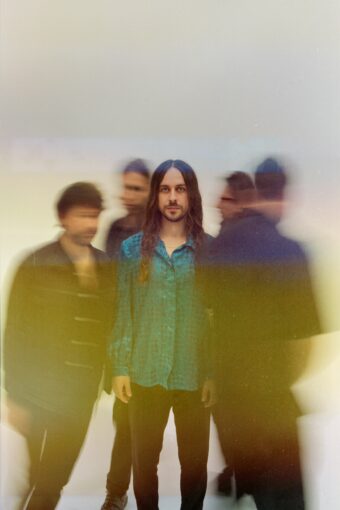
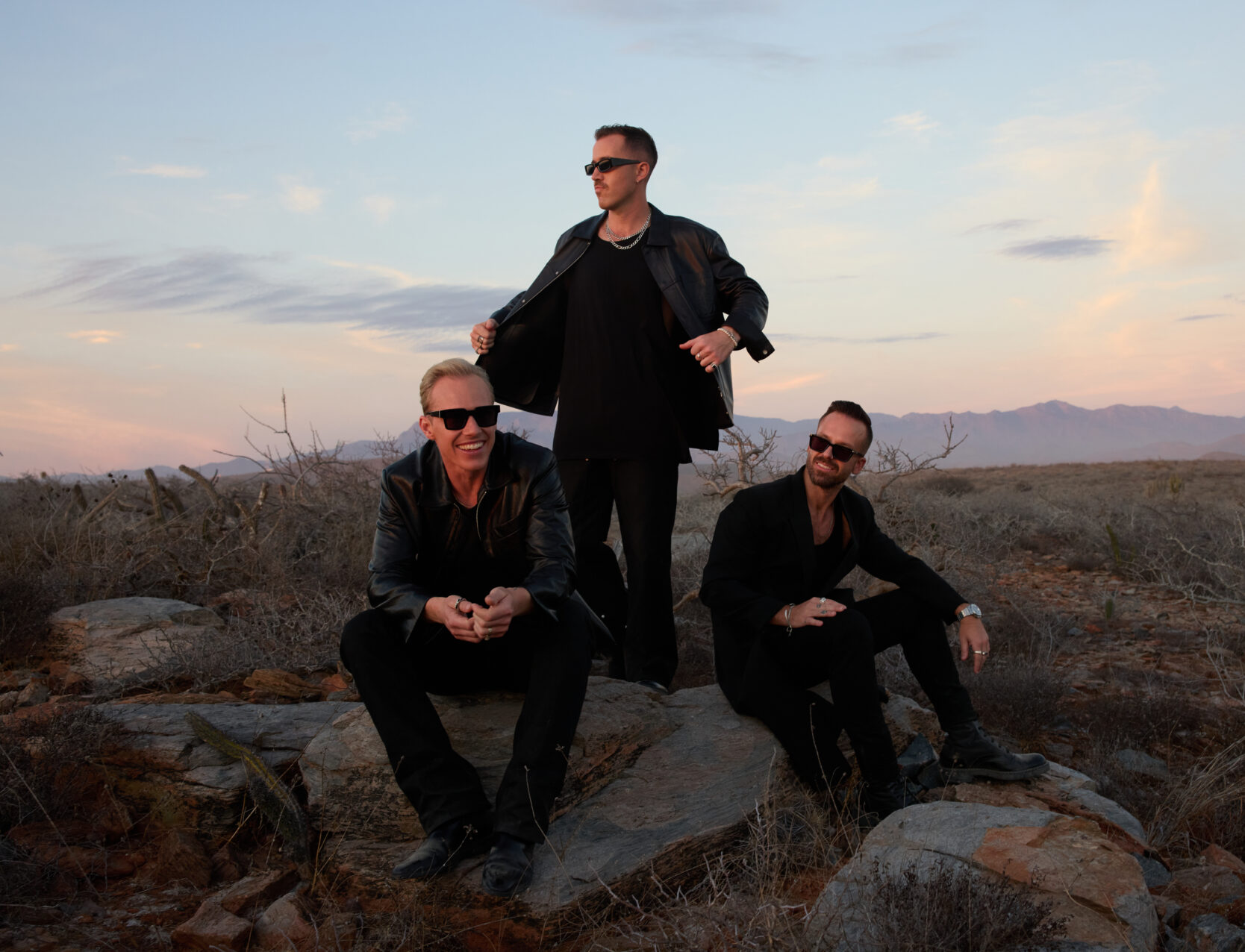
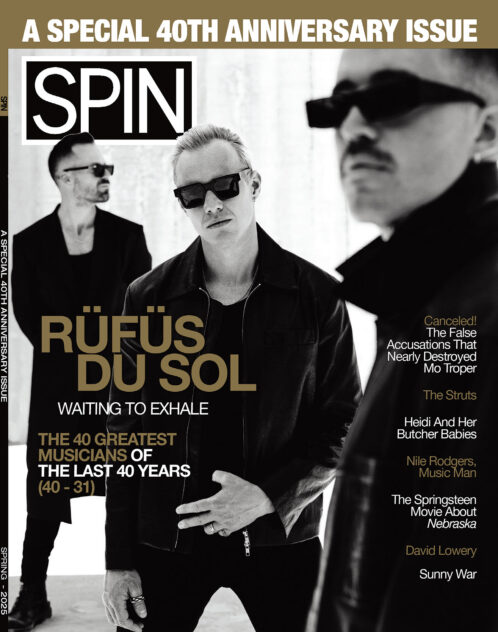
“Tonight is very, very special because it marks the end of a chapter for us as a unit, and I feel really blessed that I get to share tonight with you guys.” Darkness surrounds him, save for an ethereal light his body seems to emit, a reflection of the spotlight shining down from the batten above. Keyboardist Jon George applauds. Drummer James Hunt throws up prayer hands. The crowd’s reaction is a mixture of applause and boos. “This is an iconic venue and I feel really privileged to get to play here,” he continues. “It feels like a big honor. Thank you so much.” The spotlights go out and blackness engulfs the stage, marking the end of the show.
It’s a goodbye, and it sounds final.
Rumors that the world’s biggest live electronic band was breaking up unfurled the next day. “rufus du sol breaking up can’t be real… stop this right now,” read a post on (then) Twitter. “I would rather sit naked on a hot grill than live in a world without Rüfüs Du Sol," read another. Blurry cell phone videos of Lindqvist’s speech scattered all over social media.
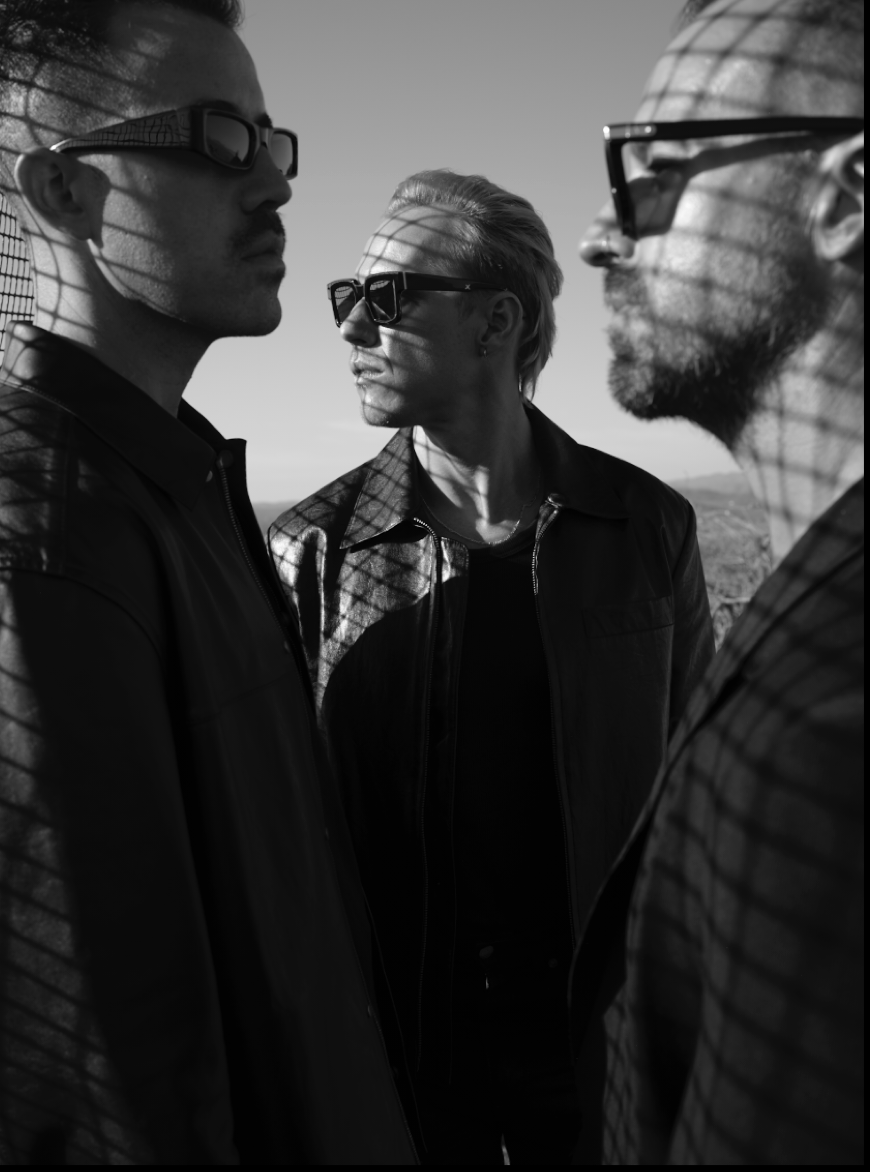
RÜFÜS DU SOL wasn’t announcing their breakup that night at the Hollywood Bowl. Or, maybe they were. The truth stays with them, and they don’t divulge personal struggles. What Lindqvist was saying, at the very least, was that they were moving apart, geographically.
The point is, they’re still together. But that doesn’t mean that their moves to opposite sides of the country didn’t create more than logistical obstacles.
If you listen to “Standing at the Gates,” the 13th track off of their latest album, Inhale/Exhale, you might not guess the song is about Lindqvist’s aunt dying of cancer. But the hints are there.
She's standing at the gates / With lonely eyes / In the end, she hesitates / Just waiting / And whatever time it takes / I'll be by her side / As the sunlight fades away / Just waiting
As Lindqvist tells it, she was given three months to live, but she ended up living three years. “My family would get together and sit with her for a lot of those three years,” he tells me over a video conference call from his home in San Diego, where he’s surrounded by a couple of keyboards, a piano, and an overhead microphone. “I just found that the waiting room of transitioning between someone being there and being gone really interesting and beautiful.”
While the song is a metaphor for the transition between life and death, it also speaks to the challenges the record-breaking Australian musicians have faced over the last 15 years.
Two years earlier, the band spent a couple of months in the Joshua Tree desert to record, a sacred place for them thanks to a creative pilgrimage they took there after moving to Los Angeles; the place where they changed their name over a trademark issue from simply RÜFÜS to RÜFÜS DU SOL.
COVID had hit and the world was on lockdown. At this point, Lindqvist, George, and Hunt had been playing together for 10 years. They were exhausted from spending a year and a half touring to support their 2018 album, Solace.
Like many bands, lots of alcohol was consumed (RÜFÜS even launching a line of hard kombucha), resentment started to build, and many fights were had over the years.
“I think that it was clear that this life wasn't sustainable, and it was showing itself,” says George, who’s also on the call, just back from St. Bart’s and now in Miami, where he and Hunt have been living since that controversial Hollywood Bowl show more than two years ago. George is wearing a white T-shirt, a silver chain around his neck, occasionally puffing on a vape.
“The behavior wasn't representing who I want to be. That just all came to a head at the same time for me personally, whilst we were trying to figure out what was going wrong.”
The pandemic forced the world to a halt. And it was no different for Lindqvist, George, and Hunt.
“I think that any big shift that we've consciously taken as a unit has been in those moments when we've been challenged the most,” Lindqvist says. “So anytime there's a big moment of change for us, there's been growing pains.”
At Joshua Tree, the group had tough conversations and adhered to a strict daily routine including group meditation and songwriting. The result of their cathartic lockdown time together came twofold: the beautiful 45-minute concert film, RÜFÜS DU SOL: Live from Joshua Tree—shot by George’s younger brother and the band’s creative director, Alex, who goes by Katzki—which at the time of this writing, has amassed 30 million views. The other was the band’s fourth album, Surrender, which earned three Grammy nominations, winning for Best Dance/Electronic Recording for the single, “Alive.”
Hunt is calling from St. Martin, where he’s taking a break before rehearsals for their 2025 world tour that will span more than 40 cities, beginning March 12 in Guadalajara, Mexico and ending Nov. 29 in Auckland, New Zealand. Since presales began last October, it’s become the biggest single-artist electronic music tour on sale of all time. They sold more than half a million tickets the first day, with over 30 stadiums sold out in nine countries.
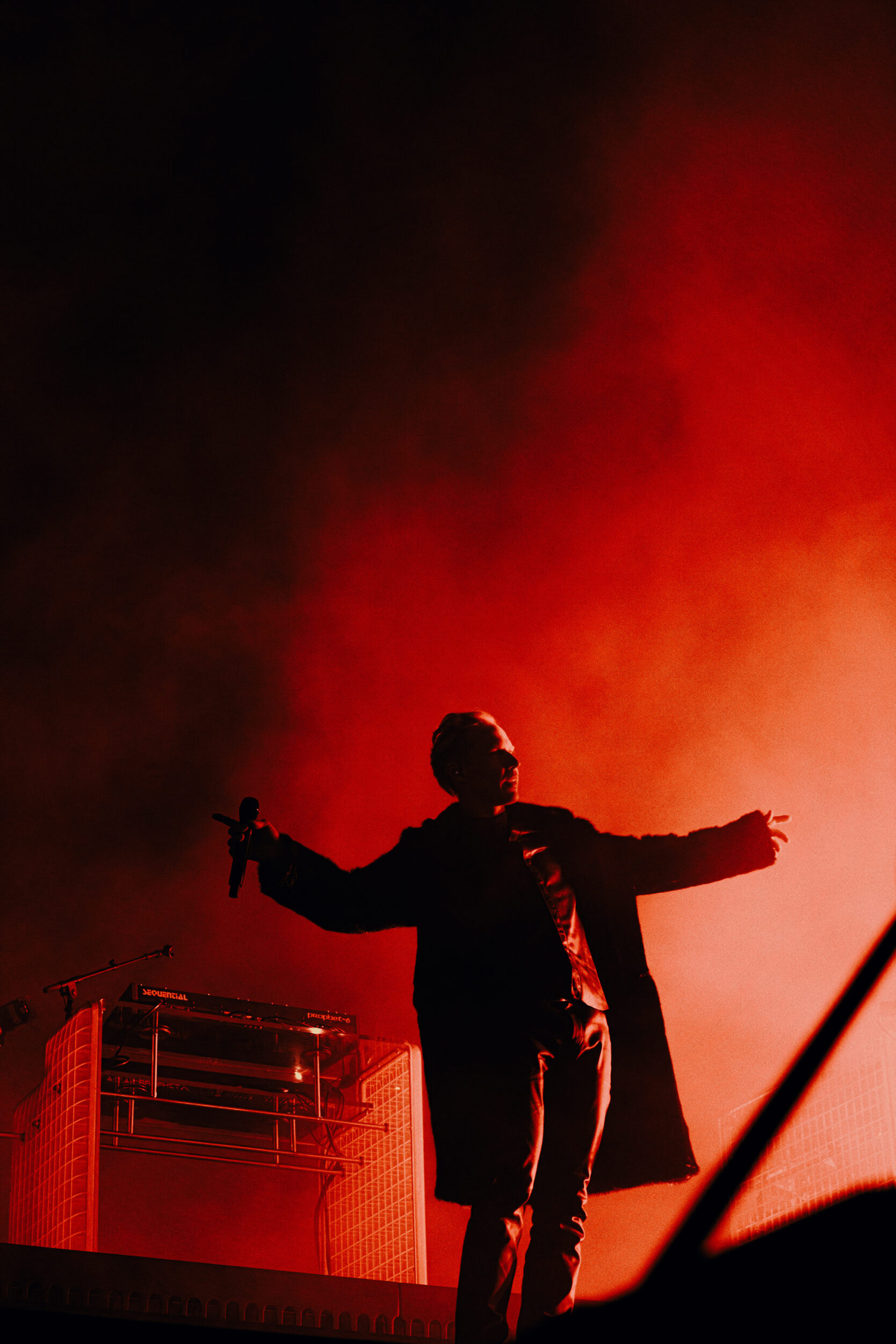
“Right now, the thing we are very focused on and excited by and inspired by is getting back into the rehearsal space,” says Hunt. “...figuring out how to express this album in the best way possible for the live show. The live show and making music in the studio are quite separate ecosystems. On a granular level, we divvy up the parts, figure out who's going to play what, and how best to translate certain moments.”
Lindqvist tells me they had their doubts about how living so far apart would affect their ability to make a new album. But it’s proven to have an incredibly positive effect on the band.
“Living separately has given us the appreciation of each other as a unit, like the sum of our parts,” he says. “Having done this for a while now, we've changed some of our habits and practices to healthier ones.”
Hunt and Lindqvist have known each other since their days at Saint Ignatius' College, Riverview, a Jesuit boarding school in their hometown of Sydney, Australia. Knowing what a great musician Lindqvist was, George—who was majoring in audio engineering—recruited him for a school project. The two recorded an EP together and enjoyed it so much, they started jamming.
Hunt, who had known Lindqvist since he was 13, studied aerospace engineering in school before dropping out and bumming around Sydney, playing drums in a few bands. “I remember that period after school, and I was lost,” he says. “I was like, what am I doing? I had heard this EP, which is the first collection of songs that Ty and Jon had made, and I loved it. I'd been listening to a lot of Caribou at that time, and it resonated, a really creative blend of electronic and psychedelia.”
Two days later, Lindqvist asked him to join the band.
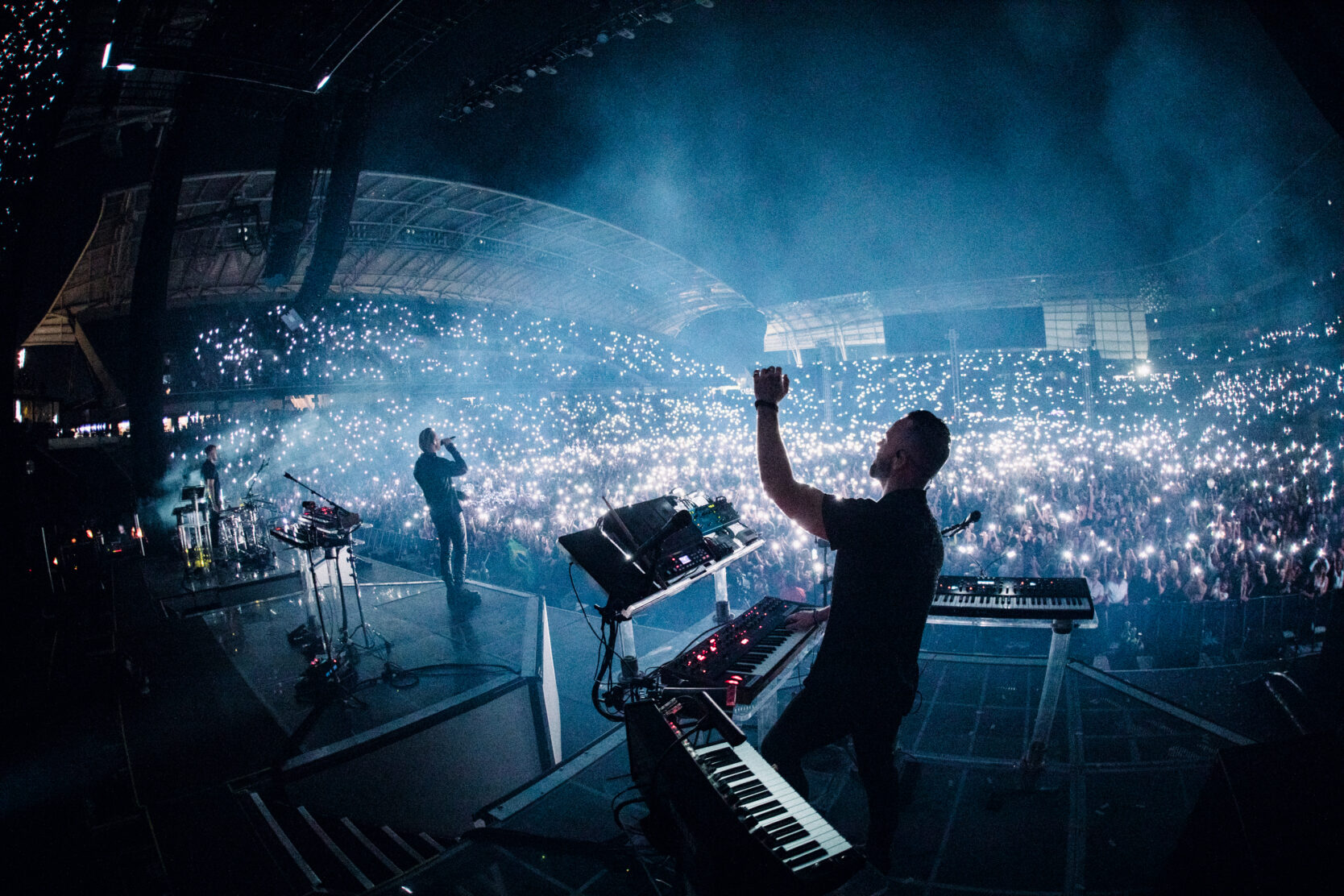
In the years they’ve been together, they have released five albums, headlined Coachella and Red Rocks, won four Aria Awards, and amassed more than 2.9 billion streams. Perhaps most importantly, the group has redefined their genre with a blend of atmospheric electronica and simple yet emotionally weighted lyrics. Their intricate concert performances—a stunning mix of choreographed lighting, supplemental playback parts, and live instrumentation—are more than large-scale dance club shows; they are transformational, even spiritual events. RÜFÜS DU SOL’s fanbase is loyal and ever-growing; an ode to how accessible the band has made the music, with a fan connection that’s rare in the genre. There’s a feeling of transcendence to both the band and its music, an open-armed, let-me-hug-you vulnerability that is welcoming and comforting; with lyrics and melodies that inspire connection on the dancefloor, and introspection through a pair of headphones alone at home.
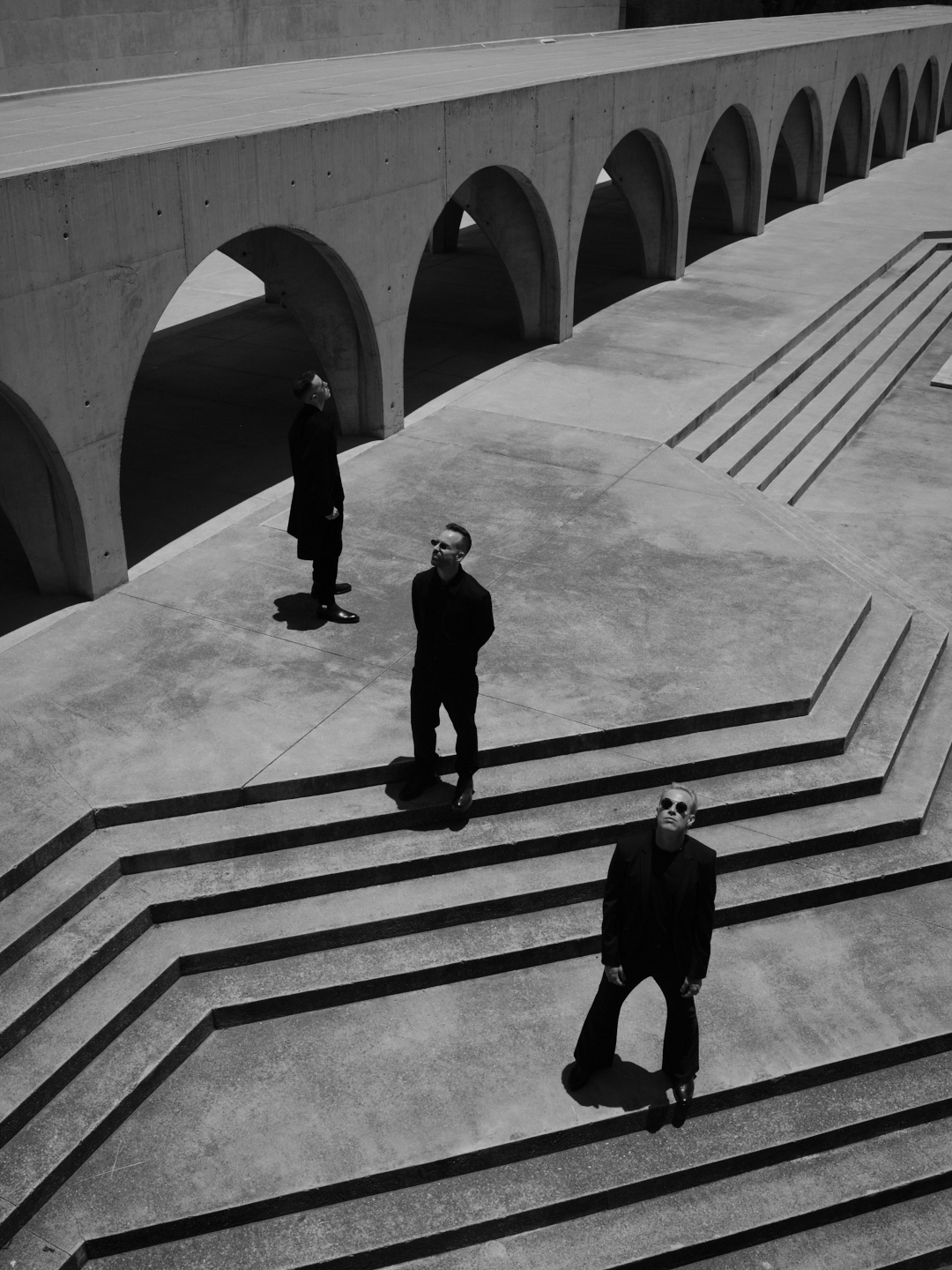
Because they spend less time together now and have lives outside of the group, it’s forced them to create another way of songwriting and recording. For Inhale/Exhale, which was released on October 11, 2024, the group decided on a two-week-on, eight-week-off schedule over an 18-month period, meeting up in various locations such as Austin, the Balearic Islands in Spain, and their former home of Los Angeles.
The new process helped them develop a stronger bond with each other, opening up creative possibilities while allowing more balance in their lives.
“I really enjoyed how we wrote this recent record,” says Lindqvist. “It feels really nice to know that we can live separately and still make a body of work that we're proud of.”
George concurs.
“I would like to write like this in the future,” he says. “This creates some more time for us to linger or to tinker away on certain aspects of it [the album] whilst we're separated. I personally like being able to have some freedom.”
Some of those healthier practices Lindqvist alluded to include group therapy, which they’ve been doing for a couple of years now.
“It's allowed us to be able to just talk about anything and allows our time in the studio to be a little more clean,” he says. “There's less resentment and tension in the studio because we have a safe space to address those things.”
Linqvist has been spending his downtime at home with his family. George and Hunt play padel—a cross between tennis and squash—together. Hunt also started boxing. “We're all working out in our own ways,” he says.
Lindqvist is excited about what’s to come.
“This is the first album that we haven't toured as we released the record, so people have gotten to live with it for a bit,” he says. “So I'm really excited for the next year because I feel like people are going to see and experience a new side of the record. For 15 years we've been working on this thing; it's our blood, sweat, and tears. It is a really special thing that we've built, and when we play the shows and we see the effect that some of the songs have on people, it'd be a shame to throw it away.”