

Jelly laughs heartily — first because it’s funny, second because he does everything heartily, and third because he knows that getting to be the punchline of a famous comedian’s joke is a sign of truly having made it.
“My whole life I was like ‘Man, if I was ever relevant enough to be the butt end of a joke!’ I love Larry the Cable Guy. Our whole family used to huddle around the TV and watch the Blue Collar Comedy tapes, you know what I’m sayin’? That’s awesome.”
Larry the Cable Guy isn’t exactly getting in on the ground floor. Examples of Jelly Roll’s ascendancy have proliferated since his career began blowing up five years ago with his song “Save Me.” It’s barely an exaggeration to say that the number of doors that have subsequently opened, and keep opening, for him have created a butterfly effect of fame.
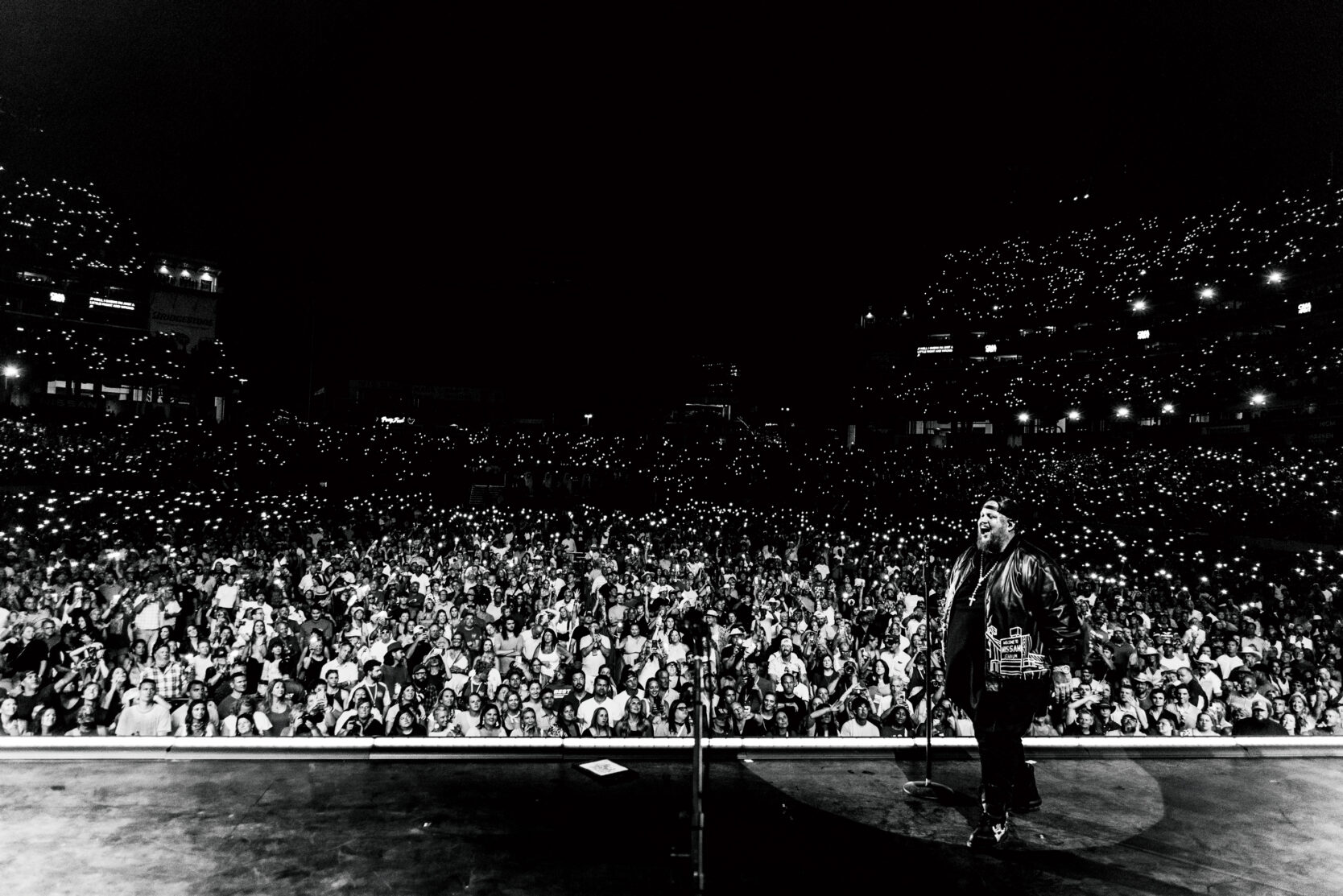
Let us count the ways. His latest album, Beautifully Broken, debuted at No. 1. He performed “Liar” and “Winning Streak” on the inaugural installment of Saturday Night Live’s 50th season. He has played Madison Square Garden, appeared on Jimmy Kimmel Live! several times, and sung at the Grand Ole Opry (ditto). He was Artist in Residence for American Idol’s 23rd season. He placed a song in an episode of Fire Country and has performed or recorded with Willie Nelson, Wiz Khalifa, Lainey Wilson, MGK, Craig Morgan, Brantley Gilbert, Struggle Jennings, and the Castellows.
His duet with Brandon Lake, “Hard Fought Hallelujah,” was number one on Billboard’s Hot Christian Songs chart for months. He has logged quality time with Dolly Parton. Last October, at Sharon Osbourne’s request, he sang “Mama, I’m Coming Home” for Ozzy Osbourne’s induction into the Rock & Roll Hall of Fame. Two months earlier, he’d made a babyface cameo at WWE’s SummerSlam, chokeslamming Austin Theory and whacking Grayson Waller with a chair. He sang “God Bless America” in April at Wrestlemania 41.
And he was a guest of honor at this year’s World Literacy Summit in Oxford — yes, that Oxford, the original one, in England. Not bad for someone who never graduated from high school and was 23 — and in jail — when he got his G.E.D.
The story of how Jelly (the nickname his mother gave him as a tyke) went from juvenile delinquency to young-adult delinquency to never wanting to set foot in a prison again is well known: There he was in the gray-bar hotel, a 23-year old with a face full of tattoos, doing time for possession of cocaine with intent to distribute and no prospects to speak of, when someone informed him that he’d become the father of a bouncing baby girl. The news, he has said, affected him the way that meeting Jesus on the Damascus Road affected Saul of Tarsus. His life hasn’t been the same since.
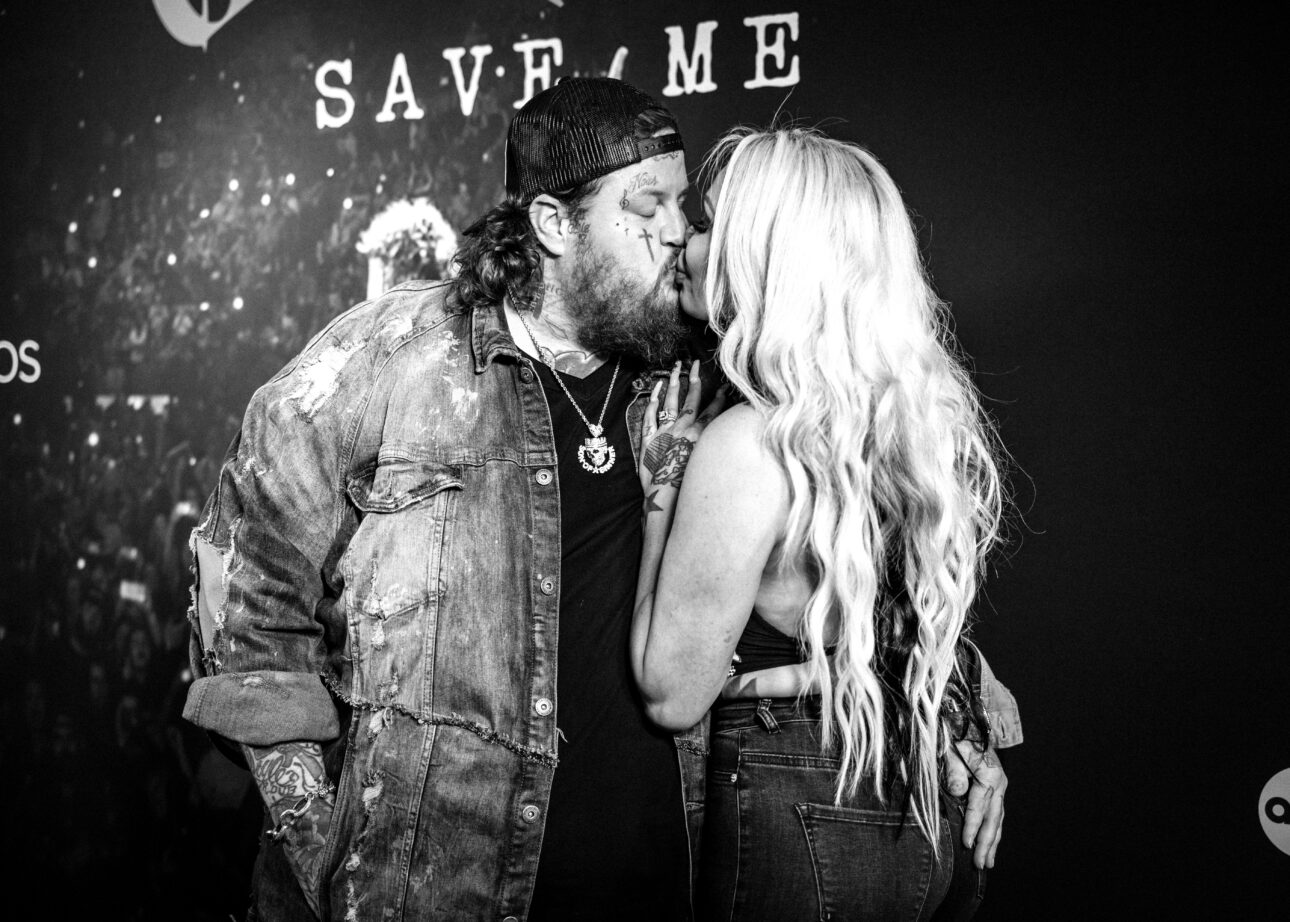 Photo Credit: Jason Kempin/Getty Images
 Photo Credit: Axelle/Bauer-Griffin/FilmMagic
 Photo Credit: Harrison/Getty Images for Stagecoach
 Photo Credit: Frazer Harrison/Getty Images for Stagecoach
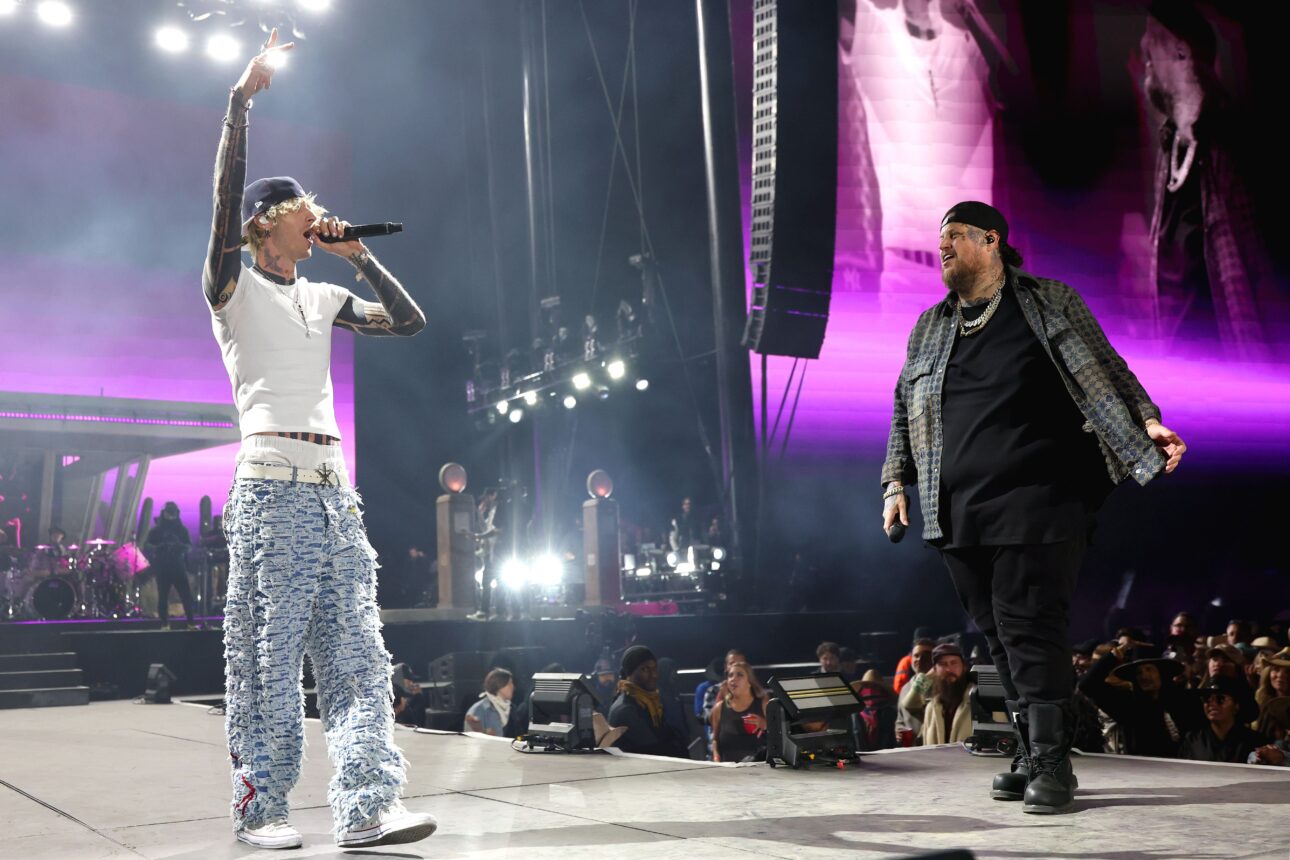 Photo Credit: Frazer Harrison/Getty Images for Stagecoach
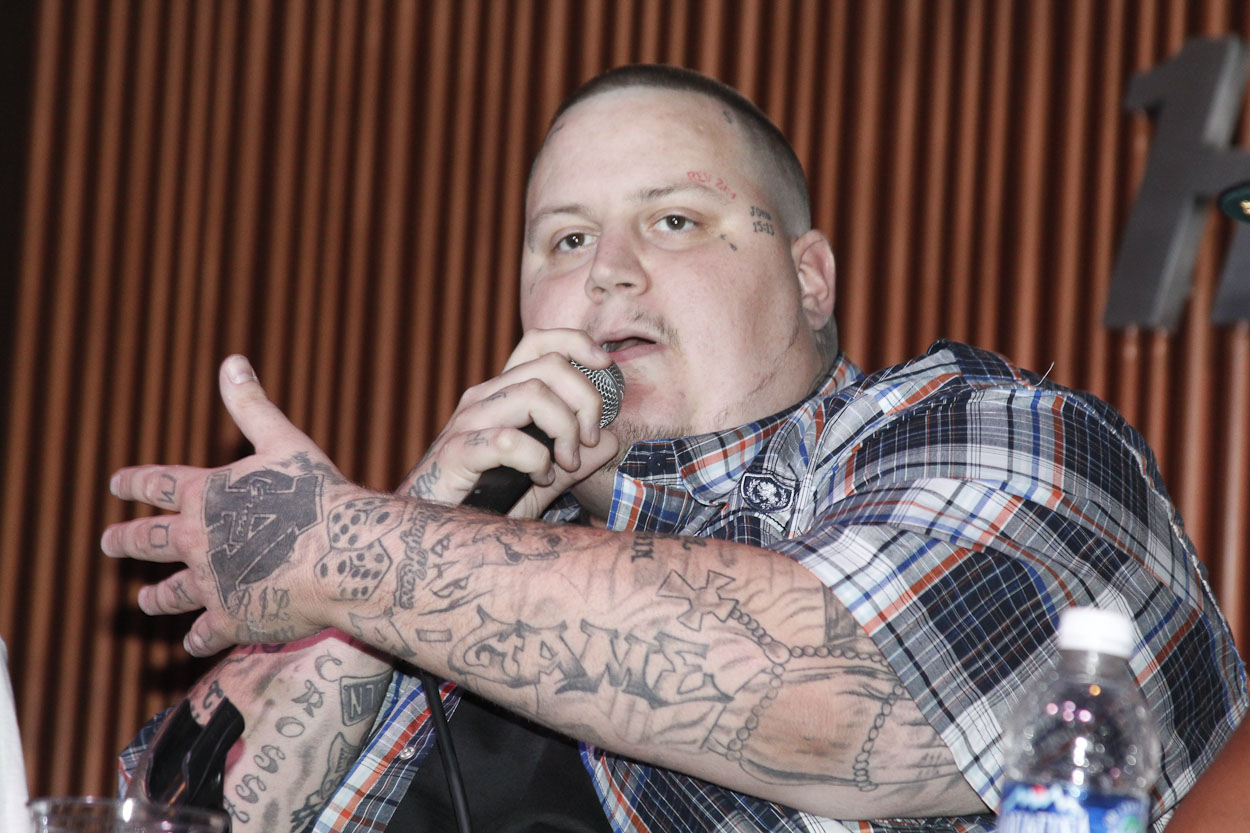 Photo Credit: Ed Rode/WireImage for NARAS
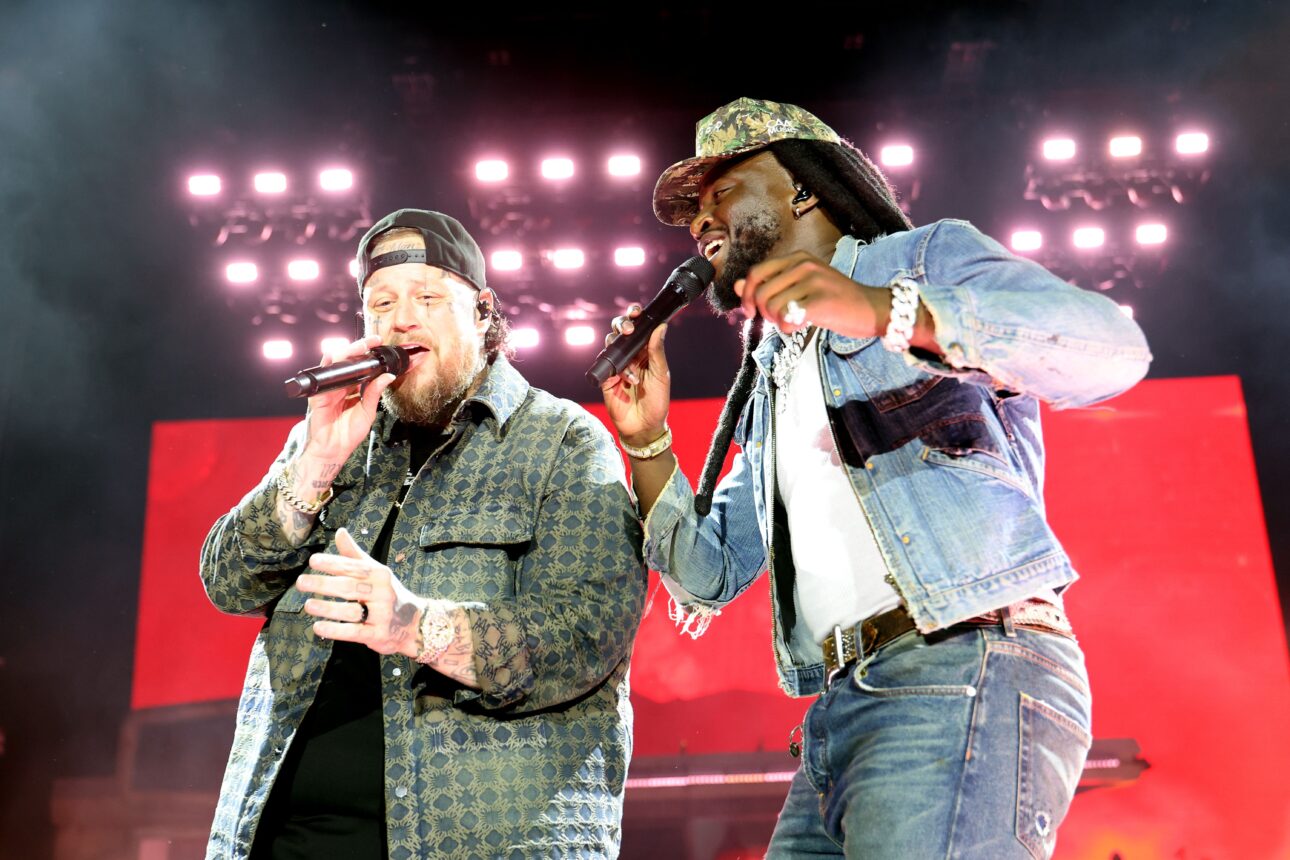 Photo Credit: Frazer Harrison/Getty Images for Stagecoach
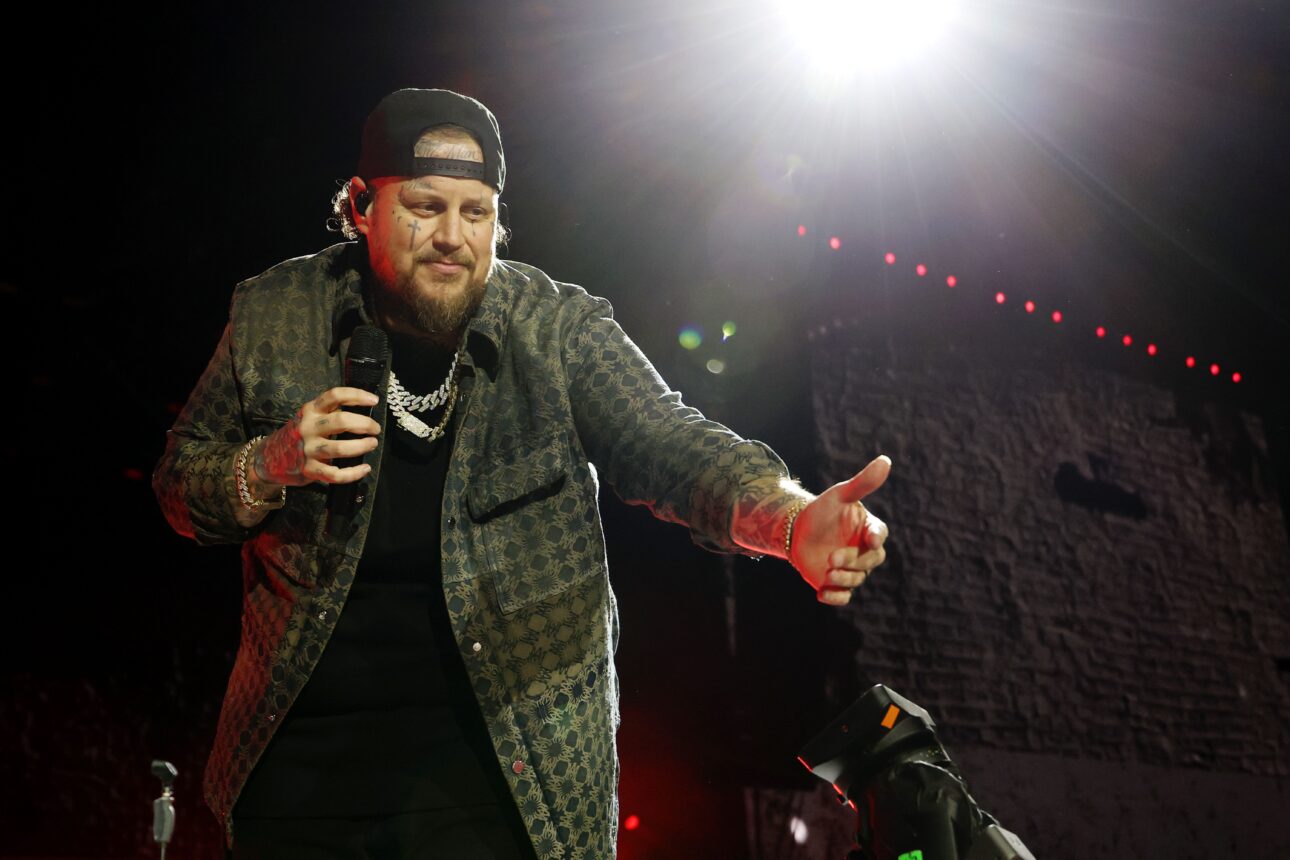 Photo Credit: Frazer Harrison/Getty Images for Stagecoach
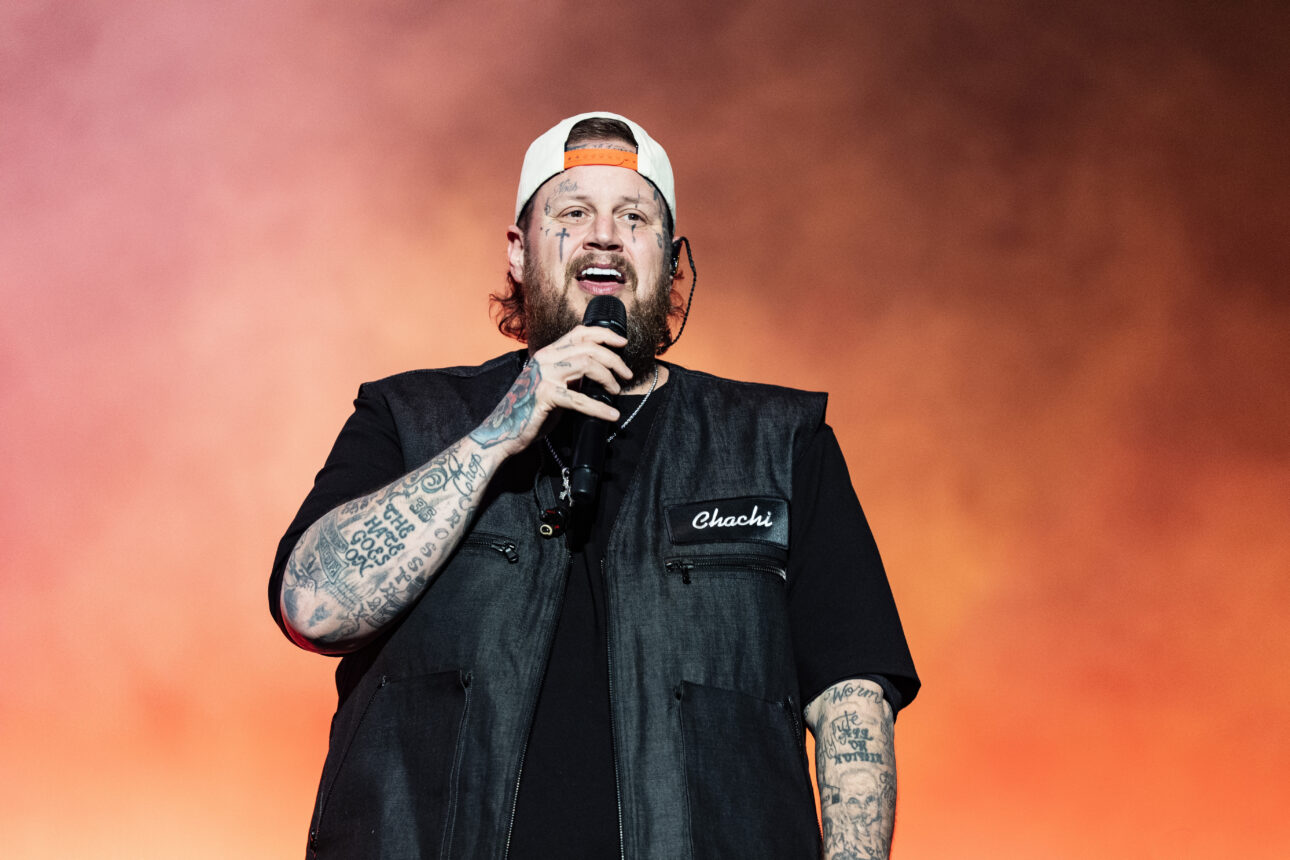 Photo Credit: Erika Goldring/WireImage
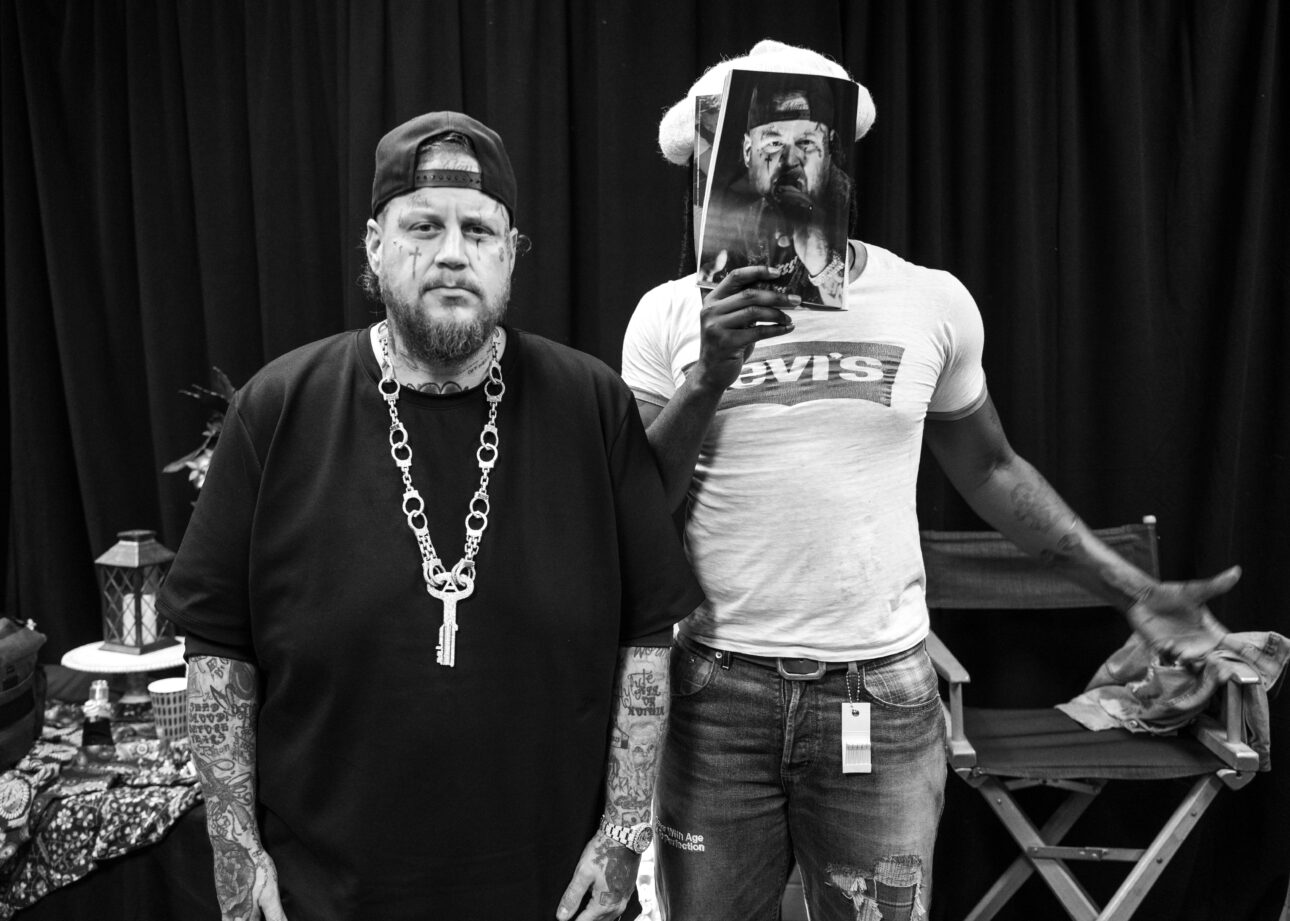 Photo Credit: John Shearer/Getty Images for CMA
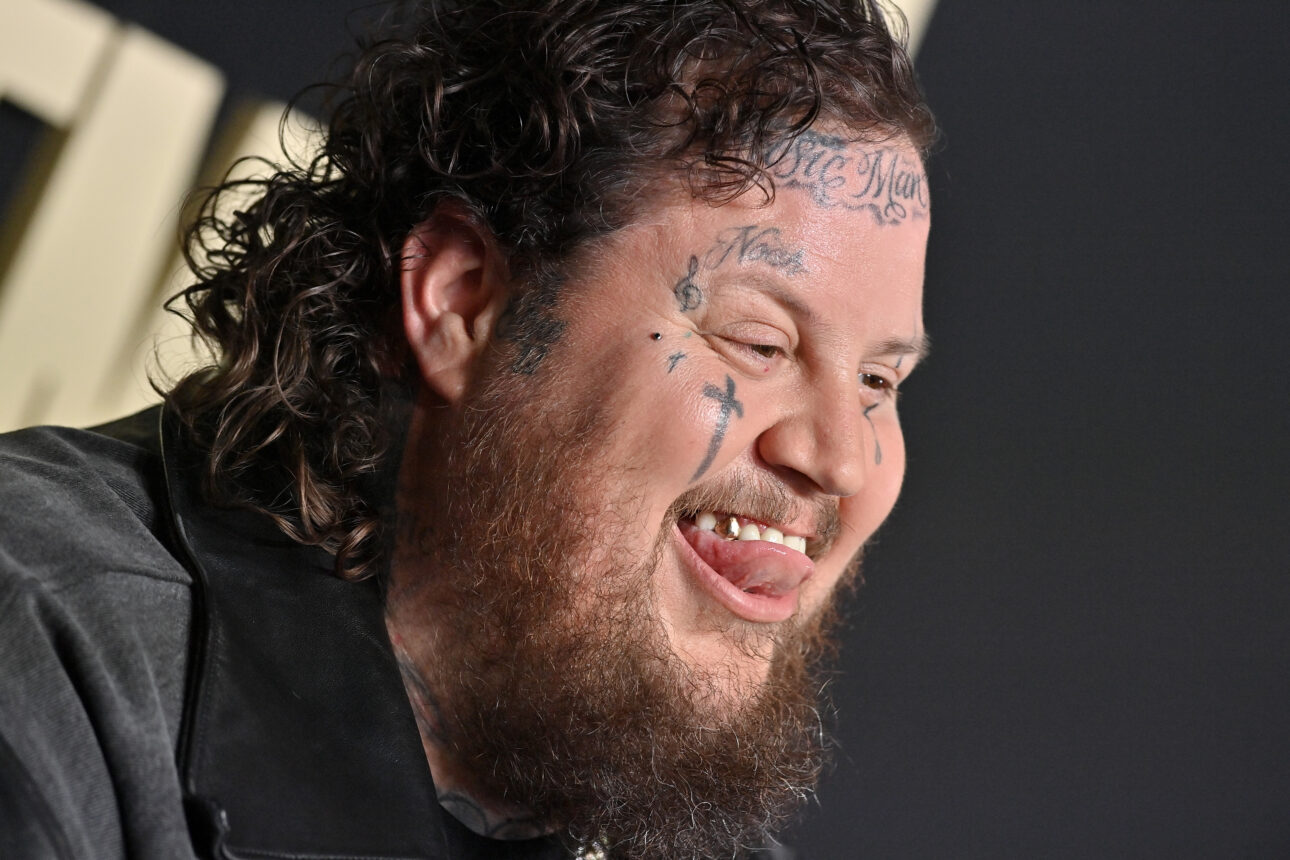 Photo Credit: Axelle/Bauer-Griffin/FilmMagic
Those who want the emotional as opposed to the police-blotter details need only consult Jelly’s music. They’re all there in the raucous hip-hop singles, mixtapes, EPs, and albums that he released from 2005 to 2020 (“I can’t even hear if the skill set was good or bad,” he says, “because I’m just listening to sheer desperation”), and they’re there in the brawny country-rock that he’s currently making and that’s currently making him. The song titles alone tell the story. The devil-on-his-shoulder “Overdose,” “Backslide,” “Behind Bars,” and “Dancing with the Devil” are about what you’d guess, as are the angel-on-his-other-shoulder “Born Again,” “Love the Heartless,” “Sunday Morning” (not the Velvet Underground’s), and “Hungover in a Church Pew.”
Let no one say that Jelly doesn’t leave it all on the floor.
It’s easy to focus on his evolution into a Role Model Who’s an Inspiration to Us All. He has, after all, come a long way. In a world — popular music — where people who go a long way often do so in the opposite direction, he’s an especially conspicuous exception. But that angle risks glossing over the depths to which he’d sunk and how difficult and fitful some of his progress has been.
“I can tell you,” he says, “that prison is everything they say it is. It’s violent. It’s tense. You do long enough in one of those places and you’re going to see and hear horrible things. I used to hear people go from one facility to the next, and they would talk about it like it was a mall.
They’d be like ‘Yo! You shoulda seen the food down at Southwest!’ And we’re like ‘Dude, we’re in jail! This sucks! This is horrible! This is not a mall, dawg!’ We’re comparing jails! People are getting raped here daily, you know what I mean?”
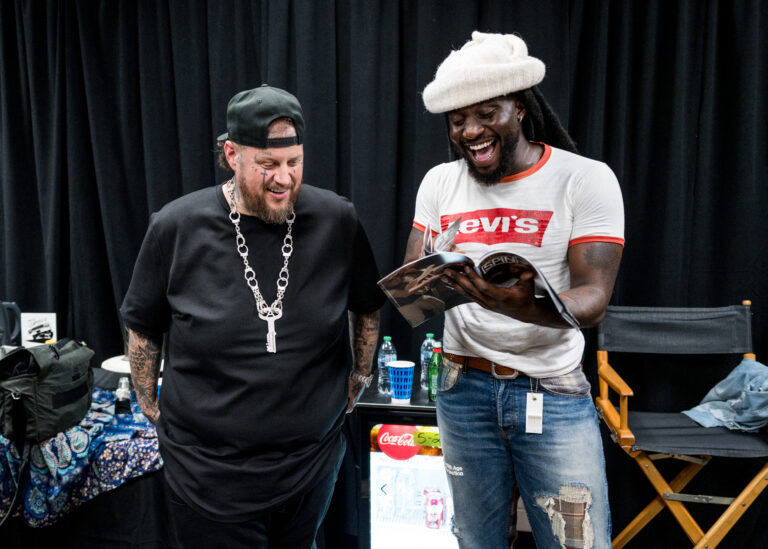
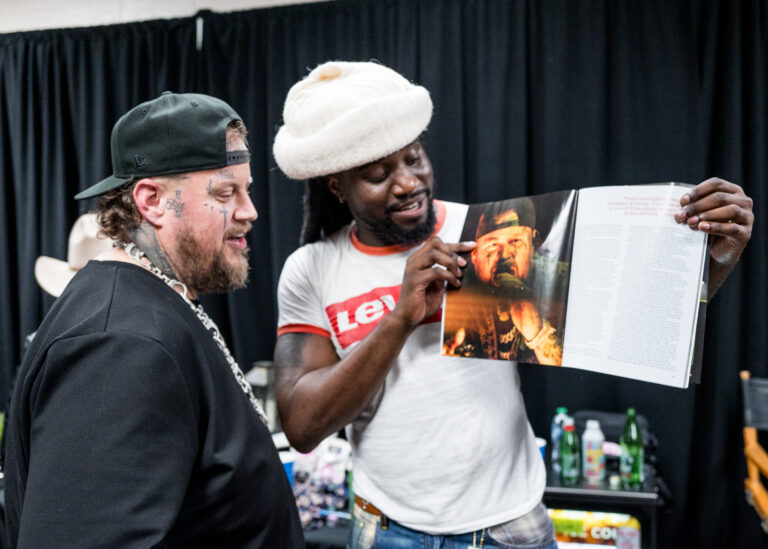
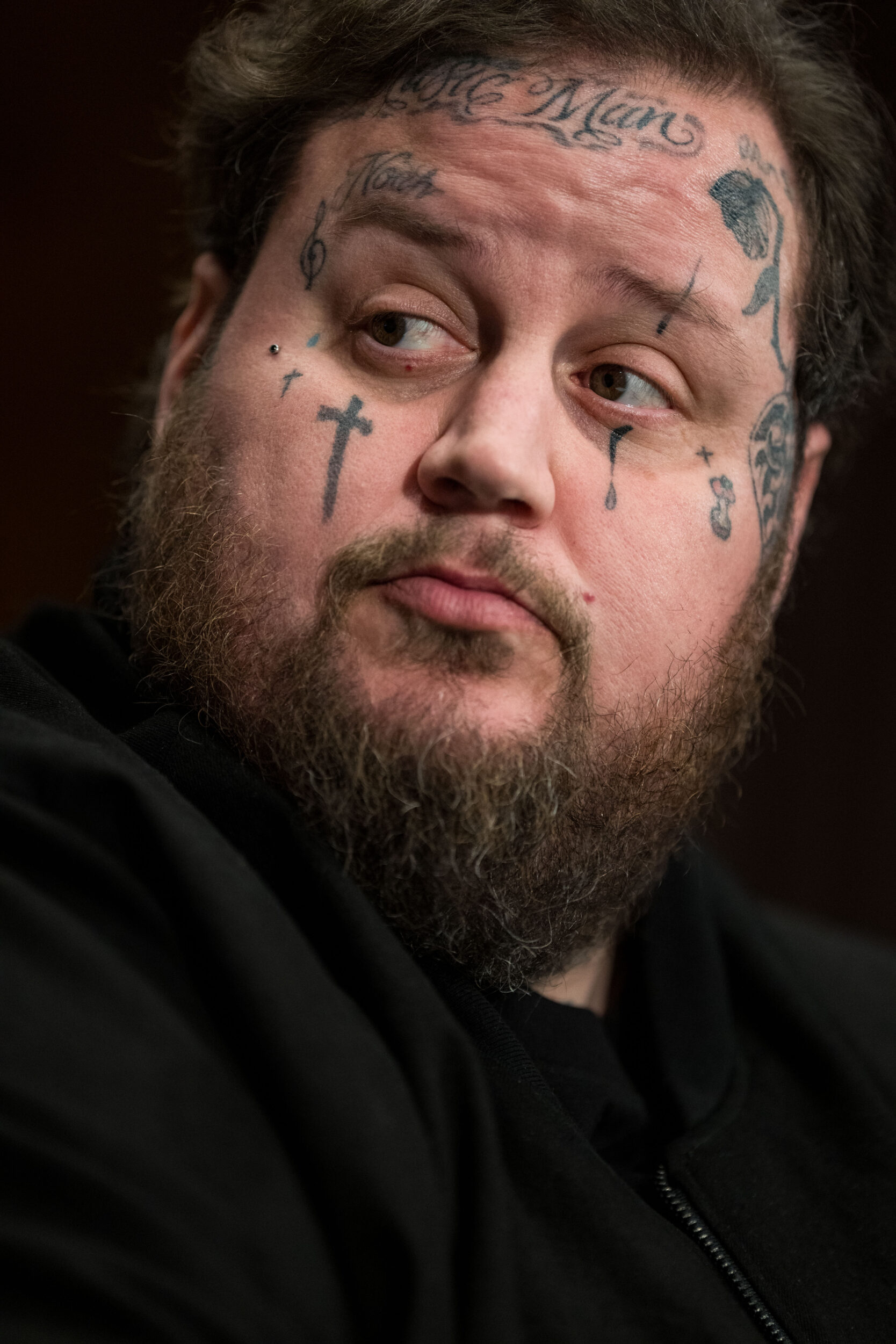
Most people probably don’t know what it’s like to be in an environment in which rape is common. They also probably don’t know what it’s like to be 6’1” and weigh 550 lbs., the weight that Jelly had ballooned to just as fame began heading his way. Before he knew it, his bulk had become as much of an extra-musical talking point as his inked-up visage.
These days, he’s tipping the scales at around 360 with an ultimate goal of 250 because, he says, it’s at that weight that it becomes possible to partake in fun activities such as skydiving and riding a rollercoaster. To that end, he’s counting calories, “only eating twice a day now with two snacks,” doing contrast therapy, playing lots of basketball, and walking three or four daily miles.
He has tried losing weight before, like the time seven-or-so years ago that he was diagnosed with atrial fibrillation. “They couldn’t get my heart back in rhythm,” he recalls. “So they had to do what they call a cardiovert, which is where they put you to sleep and try to shock you back straight. They tried twice and couldn’t get it done. They were going to try one more time the next day, or I was going to have to start taking medicine and living with it. It was a scary moment.” So scary that he crash dieted and walked five miles each morning, going from over 400 lbs. to 320 in three months. Eventually, though, with imminent death no longer a threat, he began putting the weight back on. “I didn’t take the time to build a proper relationship with food,” he says, “or to deal with my food addiction.”
In a recent interview on The Pivot Podcast with the former NFL-ers Fred Taylor, Ryan Clark, and Channing Crowder, he pointed out that with his current downsizing he has also experienced a leveling out of his hormones, implying none too subtly that the carnal aspects of his nine-year marriage to the former “high-end escort” and current Dumb Blonde Podcast hostess Bunnie XO are on the upswing. “I’m walking around the house like a pouncing tiger,” he joked. “I used to walk around looking like Eeyore. Now I’m looking like Tigger!”
Additionally, he admitted that not that long ago — eight years to be precise — he and Bunnie were “lunatics.” “We were, like, doing drugs and poppin’ ’em all the time,” he said. “It was crazy, nuts, you know what I mean? Now, we’re both kind of embarrassed a little bit to talk about it.” And, he suspects, matters could’ve turned out worse — like if wealth and fame had come to him when he was still in his 20s instead of when, in what he calls “God’s timing,” they did.
“I had none of the tools to even try to fight that stuff at 26,” he admits. “So now, whenever I’m talking to friends of mine who are rock dudes who have been through it all, I’m like ‘Dude, don’t be so hard on yourself. You were 23 years old, and the world was at your fingertips. You didn’t do anything that most people wouldn’t have done at 23.’”

Age and custodial parenthood (of Jelly’s daughter) inspired the adult DeFords to get their lives together and set out on the path that they’re famous for being on today, distancing themselves one step at a time from the potential tabloid fodder that they used to be.
The next rung on Jelly Roll’s ladder of redemption, he hopes, will be to receive an official pardon this coming December from Tennessee’s governor Bill Lee. If he does, everything from buying and insuring a home to traveling abroad will become as easy for him as it is for people who’ve kept their noses clean. “I don’t look great on paper, man,” he says. “I’m a good guy, but from ’99 to 2009, if you read about me, you’d think I was a really shit human. And that’s because it was true at the time.”

He doesn’t want or expect special treatment and wishes that the press hadn’t made his pardon process public. “I just want to be respectful of the due process,” he says. “I’m not a victim here. I’m not screaming, ‘Oh, I deserve this! I demand this!' But what they have requested of a man to prove that he has changed his life to ask for a pardon — I think that I have met the criteria.”
The juvenile-detention-center inhabitants that Jelly visits when the cameras aren’t on him would most likely agree. He has learned, for example, not to try to scare them straight or pontificate. “We went and spoke at a few of them,” he explains, “but I realized that that just still came off like Super Me-ish, like ‘Hey, I’m a big celebrity! Let me tell you about me and how you can be like me if you work hard.’ You do that enough, and you go ‘Man, that’s not the impact I’m trying to have on these kids.’”
He prefers instead genuine human interaction. “These kids need to be loved on, man. These kids need us to go in there and shoot hoops with them for an hour or two and get to know them and ask them about their granny and where they grew up, how they ended up in here, you know what I mean? I try to sit down and play cards with them and see how they work a card table, how they talk and how they’re thinking.”
Some doors still remained closed to him, such as the one between him and admittance into the I’ve-Met-Bob-Dylan Club.
“I’d love to meet Dylan,” he says. “I hope he reads this or somebody tells him how bad I want to meet him and he cares.”
He sort of almost met Dylan once. Team Bob had given him tickets to a show in Austin (“the coolest show I’d ever seen, I was blown away”), and he thought maybe, just maybe, he could squeeze a meet and greet out of the deal.
“I asked someone on his team, ‘Hey, is there any chance I’m gonna meet him?’ And they were so confidently honest when they said ‘No.’” He laughs heartily again. “If there’s one thing I like as much as a ‘yes,’ it’s a fast ‘no.’ And, man, that was an expressive ‘no’!”
More hearty laughter. What’s one setback, after all, given the roll (no pun intended) that he’s on? So he hasn’t met the Complete Unknown. At least he’s met one of his other five favorite singer-songwriters: James Taylor. “I was so nervous about embarrassing myself, I just told him ‘Thank you for your music. You’re the reason I write songs. I’d be remiss if I didn’t tell you how much your music’s done for me and my family. Thank you.’ And I, like, awkwardly probably, just ran out of the room because I was like ‘I can only fuck this up from here.’”
Two of his five heroes that he’ll never meet for sure, this side of eternity anyway, are Bob Marley and Jim Croce. But he still has a shot at Bob Seger, the only performer on his musical Mount Rushmore that he sounds much like. Both Jelly and Seger have big soulful voices that if voices were food would be steaks, cooked medium rare. And, the categorization of Jelly Roll’s music as country notwithstanding (a label that has as much to do with his Southern accent as it does with anything else), they’re both basically built for rock and roll.
So it’s not surprising that while Jelly hasn’t yet performed any Dylan, Croce, Taylor, or Marley songs, he has covered Seger. “Against the Wind,” “Turn the Page,” and “Hollywood Nights” have so far been one-offs, but he’s done “Old Time Rock and Roll” three times. One hopes that “Mainstreet,” “Night Moves,” and “2+2=?” aren’t far behind.
Maybe because his life seems too good to be true, Jelly gets asked a lot about his “greatest fear.” Does he ever catch himself thinking that the spell cast by his fairy godmother might wear off some night when the clock strikes 12? In short, yes: He consistently identifies what he dreads most as “losing it all.”
“I had this quote I would say all the time: ‘You can’t scare me with “going back to the bottom.” I’ve been there my whole life.’ It was like a mantra I lived by. But the older you get, the more you’re like, ‘God, just whatever you can do—whatever I have to do to work hard enough to not ever go back to that place’—you know what I mean? Now more than ever, I don’t want to go back to that. I’ve got so much love in my life. I’ve got so much grace in my life. I have so much gratitude in my life. I don’t want to lose that. I didn’t have any of that when I was the other person.”
He has another fear too: following up Beautifully Broken’s chart-topping, platinum success. He has been so busy since that album’s release last October that he has only written three new songs.
“But I’m going to write in July,” he says. “I’m starting to get anxious, starting to get short tempered, all the stuff that comes whenever I need to go write."
“I’m starting,” he adds, “to get the taste of blood in my mouth again.”